What If I'm Called to Testify at Multiple Trials??
Can Multiple Proceedings Subpoena Me?
Yes. Separate proceedings may subpoena the same person, and there is no numerical limit to the number of proceedings that may subpoena an individual.
Does a Later Subpoena Cancel my Obligation to Obey an Earlier Subpoena?
No. A later subpoena does not cancel an earlier subpoena. If you receive a later subpoena, you must either obey both or seek to coordinate the subpoenas with the courts.
What If I Have Conflicting Appearance Dates?
If you have conflicting appearance dates, you must resolve the issue through court coordination. You cannot unilaterally choose which subpoena to obey and, as a result, you cannot simply decide to ignore a subpoena due to a conflict.
What Happens if I Ignore a Subpoena?
Ignoring a subpoena can lead to a citation for contempt. In addition, a witness who ignores a subpoena can face further consequences such as being subject to a fine or arrest. While the rules applicable to subpoena enforcement are similar in state and federal proceedings, they are not identical. Depending on where the subpoena originated, federal laws or state laws may apply, and these laws will differ.
Can My Lawyer Come with Me to a Grand Jury?
Witnesses who are called to testify before a federal grand jury may not be accompanied by counsel in the grand jury room. However, federal witnesses may consult with counsel outside the grand jury room.
Is a Breach of Contract Criminal?
An ordinary breach of contract is civil, not criminal. However, a breach of contract can still lead to criminal charges if the conduct that constitutes the breach independently satisfies the elements of a federal criminal statute.
Does the Government Need a Federal Statute to Seek Criminal Liability?
Federal criminal liability generally requires conduct that violates a federal statute. However, a federal criminal investigation can also proceed if a person’s conduct also is prohibited by the laws of a particular state.
What Should I Do When Subpoena Dates Conflict?
Where do I file for an extension or a rescheduling of my subpoena date?
Under Rule 45(d)(3), if you need to request a modification, extension, or rescheduling of a subpoena, your motion must be filed in the federal district where compliance is sought.
What does Rule 45(d)(3) explicitly state?
Rule 45(d)(3) expressly requires that any request to quash or modify a subpoena must take the form of a motion to the court.
What does Rule 45(d)(1) explicitly state?
Rule 45(d)(1) explicitly requires that the party issuing a subpoena avoid imposing an undue burden or expense on the person subpoenaed. This rule also authorizes the court to issue sanctions if a party issuing a subpoena is found to have imposed an undue burden.
Is there a way to avoid responding to an overly broad or burdensome document subpoena?
Yes. Federal Criminal Rule 17(c)(2) provides a mechanism for quashing a document subpoena that imposes an unreasonable or oppressive burden. As the federal civil subpoena regulations explain, witnesses cannot simply ignore document subpoenas that impose unreasonable or oppressive burdens. Witnesses must instead move to quash or modify a document subpoena.
Where can a federal civil subpoena be served?
Federal civil subpoenas may be served anywhere within the United States, as stated in Rule 45(b)(2).
Where must a witness respond to a federal civil subpoena?
Under Rule 45(c), witnesses must generally respond to federal civil subpoenas within 100 miles from the location of the proceeding.
Where can a federal criminal subpoena be served?
Federal criminal subpoenas can be served nationwide. As Federal Criminal Rule 17(e)(1) states, “a subpoena issued under this rule may be served anywhere within the United States.”
How are interstate witness subpoenas enforced in criminal cases?
While there are separate procedures for serving and enforcing criminal subpoenas in federal and state court, enforcement for state-court criminal subpoenas typically involves the Uniform Act to Serve and Enforce Subpoenas on Witnesses. Nearly every state has enacted this act, and it serves to allow state court witnesses to be served and to require compliance in interstate criminal-court proceedings.
What does the Uniform Act to Serve and Enforce Subpoenas on Witnesses establish?
The Uniform Act to Serve and Enforce Subpoenas on Witnesses establishes the necessary steps to be taken in the event that a witness is subpoenaed by a court in one state but is located in another. The act describes the steps to be taken to serve a subpoena on a witness and a description of how the subpoena will be enforced by the court.
Can I Refuse to Testify in Multiple Criminal Trials?
Can You Use a Privilege to Decline Testimony?
If you have been criminally charged and are facing a trial, you have the option to decline to testify. In fact, the Fifth Amendment was written with this option in mind. This is an example of a legal privilege that applies specifically to criminal defendants. However, unless the privilege is specific to you as a criminal defendant, it will not shield you from testifying. If you are a subpoenaed witness but not the criminal defendant, you generally must appear to testify. If you have a legal privilege that allows you to decline testimony, you must assert the appropriate privilege to do so; you cannot rely on the same privilege that applies to the defendant.
Can the Government Compel Testimony Even If You Have a Fifth Amendment Privilege?
The Fifth Amendment privilege does not allow a witness to avoid answering a question when there is no reasonable risk of criminal liability. When a witness has a well-grounded fear of criminal liability, the privilege protects the witness from answering. When this happens, the government may seek to remove a witness’s Fifth Amendment protection. The government does this by granting “use-and-derivative-use” immunity. This is a form of immunity that prevents the government from using the witness’s testimony, or any evidence that was discovered as a result of providing testimony, to prosecute the witness in a criminal trial. The government, in other words, takes the privilege away in exchange for promising not to use the witness’s own testimony against the witness. The U.S. Supreme Court has established this principle Kastigar v. United States, 406 U.S. 441 (1972).
Importantly, Kastigar prohibits a witness from refusing to answer questions once a court finds the witness is no longer in danger of criminal prosecution as a result of speaking. If a court finds that a witness is eligible for use-and-derivative-use immunity, and that witness refuses to testify, then the witness can be held in contempt of court.
How Do Witnesses Effectively Invoke Their Fifth Amendment Privilege?
If you need to invoke the Fifth Amendment, you must invoke your privilege separately on a question-by-question basis. You cannot invoke it once and rely on that invocation to deny all subsequent questions in the case.
When Does Testimony Present a Reasonable Risk of Criminal Liability?
Courts use judicial evaluation to determine if the answers to certain questions present a reasonable risk of criminal liability for a witness. This was the practice in Hoffman v. United States, 341 U.S. 479 (1951), and the U.S. Supreme Court approved of this approach. In Hoffman, the Court explicitly stated, “The witness’ privilege is not violated by the rule that the court must consider the likelihood of incrimination in determining whether the witness is entitled to refrain from answering.”
Do Witnesses Have a Sixth Amendment Right to Counsel?
Nondefendant witnesses have no general Sixth Amendment right to counsel. They are not guaranteed an appointed lawyer to defend themselves or any other legal rights in the case. If you are a witness, you must make arrangements to obtain, and pay for, legal representation yourself.
How Do I Avoid Inconsistent Testimony Across Multiple Trials?
How Do I Testify to Avoid Mistaken or Inconsistent Testimony?
If you have been subpoenaed to testify, you should avoid guessing, speculating, or volunteering any information to the prosecutor or judge. Instead, answer only the specific questions that you are asked. Remember, if you have been subpoenaed to testify in a criminal case, any statement you make under oath can be used to charge you with perjury if that statement is determined to be false. A criminal witness does not have any reason to offer more testimony than is necessary, and it can be dangerous to volunteer testimony because you can accidentally expose yourself to criminal charges in the process.
What If My Memory of an Event Changes Over Time?
If you have been subpoenaed to testify multiple times, your memory of a particular event or detail may change over time. If your memory changes, it will be better for you to admit that your memory has changed rather than trying to pretend that you remember everything with complete certainty. Falsely claiming to remember something in order to maintain consistency can lead to charges of perjury, and, for this reason, criminal witnesses should be very careful when claiming to be 100% sure of anything.
What Is the Difference Between “I Do Not Know” and “I Do Not Recall”?
There is a difference between these two phrases. When a witness says “I do not know” to a question, the witness is stating that the answer is unknown to the witness. When a witness says “I do not recall” to a question, the witness is stating that the answer may be known to the witness, but it cannot be recalled by the witness at the moment of testimony.
Both “I do not know” and “I do not recall” may have different implications. If you have been subpoenaed to testify in a criminal trial, remember to be very careful about testifying as a witness to an incident, as even a minor mistake could be used to challenge your credibility.
Can My Prior Testimony be Used to Challenge My Account?
Yes. Any testimony that you provided in a prior proceeding can be used to challenge your current account in the present proceeding. For example, if you testified that an event was not dangerous in a prior trial, a prosecutor can use this to challenge your claim that an event was dangerous in the present trial. Federal Rule of Evidence 801(d)(1)(A) explicitly makes prior-sworn inconsistent statements admissible when the witness was available for cross-examination.
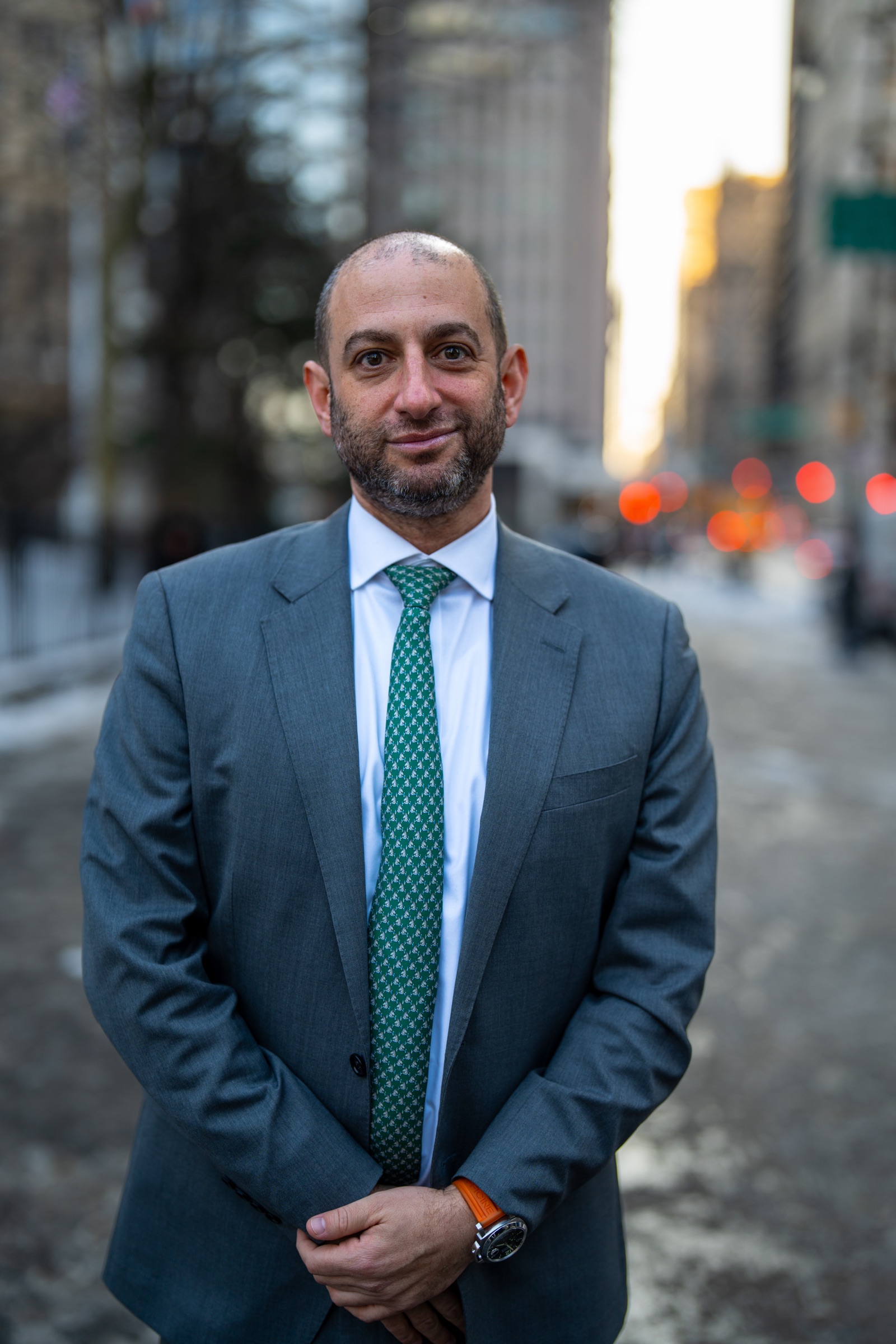
Todd Spodek is the managing partner of Spodek Law Group, a second generation criminal defense firm that has been practicing since 1976.
Can I Review or Share Transcripts from Earlier Testimony?
Can I Review and Correct My Prior Deposition Testimony?
Yes. If a witness provides a deposition, the witness is entitled to review and correct that deposition’s transcript. Under Federal Rule of Civil Procedure 30(e), which applies to depositions in federal criminal cases through Federal Rule of Criminal Procedure 15, the witness must be allowed 30 days after being notified that the transcript is available in which to review it and make changes. However, if a witness decides to correct the record, the witness must also state the reasons for any changes.
Are There Options for Obtaining Transcripts of Prior Trial Proceedings?
Yes. While there are different rules for obtaining transcripts of depositions and trial proceedings, it is possible to obtain certified copies of federal-court transcripts. Under 28 U.S.C. § 753(b), parties to a trial may obtain certified copies of trial proceedings by paying the prescribed fees.
Are Federal Grand Jury Witnesses Bound by the Grand Jury’s Secrecy Obligation?
Not necessarily. While federal grand-jury witnesses are not generally bound by Rule 6(e)’s secrecy obligation, grand-jury witness subpoenas must state the purpose for which testimony is being gathered. Federal grand-jury proceedings are secret, and Rule 6(e) expressly prohibits the disclosure of grand-jury transcripts. If you are a witness to a federal grand jury proceeding, and you intend to preserve any information about the proceedings, you should promptly seek a subpoena for the transcript of your testimony.
Can Witnesses Obtain Copies of Their Own Trial Testimony?
Witnesses have the right to obtain copies of their own trial testimony, unless a sequester order issued under Rule 615 prohibits this access. Rule 615 states, “The court, on motion, may order witnesses . .. be sequestered from the courthouse, or so arranged, that they will not hear testimony.” Under a sequester order, witnesses can be barred from seeing copies of trial transcripts or sharing their own testimony with others.
What Other Records are Subject to Disclosure and Review during Discovery?
While there are restrictions on sharing prior trial testimony, there is nothing preventing the sharing of other records, provided those records are accessible. Under Civil Rule 26(b)(1), discovery is permitted for any nonprivileged matter that is relevant to the case and is proportional to the needs of the case. Documents, records, emails, and other materials that do not fall under these restrictions are all subject to disclosure during discovery.
What Happens to Sealed Transcripts?
Sealed transcripts are generally not subject to disclosure unless the court orders it. Generally, this prohibits witnesses from reading and sharing their own testimony and makes other records inaccessible to the public. If you are involved in a case that has a sealed transcript and need to obtain a copy of it for legal defense purposes, you should talk to your lawyer about what to do next.
Can a Previously Undisclosed Witness Testify at Trial?
Do the Prosecution’s Witness Lists Have to Be 100% Accurate?
No. If the prosecution does not call a person it lists as a witness, it can still seek dismissal by presenting the same information through other means. The defendant may still be able to object on various grounds if the person is unavailable, and the prosecutors may use other witnesses, authenticated recordings, photographs, video, and other forms of evidence.
How Does the Hearsay Rule Impact a Witness’s Availability at Trial?
The hearsay rule prohibits the use of out-of-court statements as evidence in court. While there are exceptions for the purposes of protecting victims, the U.S. Supreme Court has been protective of defendants’ rights under the Sixth Amendment. This was the case in Crawford v. Washington (2004), when the Court held that a testimonial out-of-court statement may be admitted against a defendant only if:
- The declarant is unavailable to testify at trial; and
- The defendant had a prior opportunity to cross-examine the declarant.
Statements that are not testimonial fall outside the Confrontation Clause and are governed by the ordinary hearsay rules.
Does a Federal Trial’s Prosecution Team Have to Disclose a Witness List?
Generally, no. For all federal prosecutions except those for the death penalty, the prosecution is not required to disclose its witness list. But for the death penalty cases, however, 18 U.S.C. § 3432 requires a witness list and other items to be made available to the defendant at least three entire days before trial.
Does Rule 16 Apply to the Prosecution’s Witness List?
Under Rule 16(d)(2), a court may order disclosure of a witness list if it is in the interest of justice. If the court does so and the prosecution fails to comply with the order, the court can issue sanctions, including:
- Ordering a continuance;
- Excluding evidence; and/or
- Granting any other just remedy.
Does the Sixth Amendment Protect a Defendant’s Right to Call a Witness?
The Sixth Amendment’s Compulsory Process Clause prohibits interfering with a defendant’s ability to call its own witnesses.
Can the Court Reduce Travel, Cost, or Safety Burdens?
Are There Provisions for Witnesses to Be Compensated for Their Travel and Time?
Yes. With the service of a subpoena, the party to whom the witness must testify must tender “one day’s witness fee and mileage,” according to Rule 45(b)(1). The amount of the witness fee is determined under 28 U.S.C. § 1821(b), and it is currently $40 per day. 28 U.S.C. § 1821(b) also governs mileage reimbursement for which witnesses qualify.
Are Witnesses Entitled to Other Forms of Compensation in State and Federal Criminal Trials?
Yes. In state and federal criminal trials, witnesses may receive compensation for expenses and costs in addition to travel reimbursement and a daily witness fee. With qualifying mileage, federal witnesses may receive a monthly housing allowance and, in some circumstances, a meal stipend. A state statute in New York may require witnesses to be compensated for other costs, including a lodging fee, child care reimbursement, or any other reasonable and necessary expense.
Can I Testify Remotely in a Federal Civil Trial?
Witnesses can testify remotely if “for good cause, he or she can show that it is in the interest of justice” for remote testimony to be allowed. Also, the court must be satisfied that any necessary protections against “unlawful testimony or other potential interference” will be taken into place. This rule was made under Civil Rule 43(a), and this rule allows for a broad range of reasons why a witness could appear remotely.
Can I Testify Remotely in a Federal Criminal Trial?
Federal Criminal Rule 26 generally requires that a witness testify in open court. “Testimony at trial shall be taken in open court unless a federal rule or statute provides otherwise.” This rule differs from a rule for civil cases, and witnesses who wish to testify remotely in criminal cases must make specific requests for exemptions from these rules.
Do State Courts Have to Make Accommodations for Witnesses with Disabilities?
Yes. Under ADA Title II, “no public entity shall discriminate against any individual on the basis of disability in the provision of goods, services, facilities, privileges, advantages, or accommodations.” State courts, as public entities, must make any necessary modifications for a witness with a disability, provided the modifications are not an undue burden on the court.
Does the Federal Government Provide Protection for Witnesses?
Yes. Under 18 U.S.C. § 3521, the federal government provides witness protection to “witnesses who are at risk of physical or other harm as a result of their knowledge and testimony in criminal proceedings.” In some cases, the federal government also provides protection to certain family members of witnesses who provide testimony in federal criminal trials.
Contact a Federal Criminal Defense Attorney
Nothing here is legal advice, and the details of your case matter. Todd Spodek and Spodek Law Group take federal criminal and white collar cases nationwide, from offices in New York, Brooklyn, Queens and Los Angeles. You can reach the firm at 212-300-5196.
Reading is good. Calling is better.
Answered within 24 hours, guaranteed. Some stories are better told out loud -
212 300 5196