Second Opinions on Federal Proffer Agreements: When to Get One.
When Do I Need a Second Opinion on a Proffer Before I Speak?
Can I Just Get a Second Opinion on My Proffer if I Am Not Satisfied After Speaking?
Can I Seek a Second Opinion on My Proffer if I Get Charges Before speaking?
When Is a Second Opinion on a Proffer Most Important?
How Can Prosecutors Use What I Say in a Proffer?
Although federal proffer agreements often include language and provisions intended to protect defendants, most proffer agreements also include language and carve-outs allowing the government to use proffer disclosures under certain circumstances. Some examples include:
- Permitting investigators to pursue investigative leads, While typical proffer agreements prohibit prosecutors from introducing a defendant’s proffer statements directly during the government’s case-in-chief, most proffer agreements also include a broad exception allowing investigators to pursue leads derived from the proffer disclosures. This allows investigators to use the information shared in the proffer to pursue further investigation and execute warrants that may lead to the government obtaining other admissible evidence.
- Permitting derivative use of proffer statements, While permitting investigators to pursue investigative leads is a form of “derivative use,” proffer agreements vary with respect to the extent to which they allow prosecutors to actually use the derivative information in court. As with other exceptions, unless an “immunized proffer agreement” is negotiated and signed, a typical federal proffer agreement permits the government’s prosecutors to introduce the derivative evidence obtained as a result of the defendant’s disclosures in order to support criminal charges.
- Permitting impeachment (i.e. the use of inconsistent statements), Proffers are generally not admissible for purposes of impeachment. In other words, prosecutors will typically not be able to use inconsistent statements from a proffer against a defendant who testifies at trial. But many proffer agreements include a specific exception that allows prosecutors to use the proffer statements to impeach the defendant’s credibility if he or she testifies at trial. If there is an inconsistency between a defendant’s statements during the proffer and their statements at trial, prosecutors can introduce the transcript of the proffer as evidence.
- Permitting rebuttal (i.e. of evidence and arguments), Some federal proffer agreements include provisions allowing prosecutors to use the defendant’s statements in order to rebut allegations made by the defendant or other individuals during the proceedings. For example, some federal proffer agreements permit the government to use a defendant’s proffer disclosures “in other circumstances in which the defendant’s false statement or testimony is a relevant or probative matter.”
- Waiver of Federal Rule of Evidence 410, Federal Rule of Evidence 410 prohibits prosecutors from introducing against a defendant “a statement made during plea discussions with an attorney for the prosecuting authority if the discussions did not result in a guilty plea or they resulted in a later-withdrawn guilty plea.” However, as a result of the Supreme Court’s decision in United States v. Mezzanatto, a defendant can “knowingly and voluntarily” waive their Rule 410 protections through an enforceable proffer agreement. If the government negotiates suitable waiver language, prosecutors may use disclosures made in confidence to support a criminal case, including as evidence in chief at trial.
Is a Federal Proffer the Same as Immunity?
“Having “Queen for a Day” status” does not “confer immunity” in the usual sense of the term. Having “Queen for a Day” status just means that, if the defendant provides information that the government considers valuable, the government may choose to offer it immunity under a statutory or contractual provision. While many “Queen for a Day” proffers eventually lead to immunity, an ordinary voluntary proffer is not compelled “Kastigar testimony.”
“Statutory immunity” or “compelled immunity” is a different species of immunity altogether. Under 18 U.S.C. § 6002:
“[N]o testimony or other information compelled under the order (or any information directly or indirectly derived from such testimony or other information) may be used against the witness in any criminal case, except a prosecution for perjury, giving a false statement, or otherwise failing to comply with the order.”
With respect to the prosecutors’ obligation to ensure that they “do not knowingly use” the immunized testimony (or “any evidence obtained as a result of, or derived from” such testimony), 18 U.S.C. § 6003(b)(1) sets forth the following:
“The prosecutors shall not be held to have knowingly used the immunized testimony or derived evidence if they can establish that they obtained it from an independent source.”
Unlike immunized voluntary proffer testimony, prosecutors cannot unilaterally grant immunized immunity in this scenario. Instead, under 18 U.S.C. § 6003, federal prosecutors must apply to a federal judge for a court order compelling testimony in exchange for immunity.
Other types of immunity are available in the federal system as well. This includes, among others, Rule 11 plea agreements (which govern negotiated guilty or nolo contendere pleas), non-prosecution agreements (which, generally speaking, are contractual promises limiting the prosecutor’s ability to take specific prosecutorial action against certain individuals), and cooperation agreements (which define a defendant’s ongoing assistance duties and any resulting prosecutorial commitments).
As we have discussed above, simply receiving a proffer offer does not mean the government has contemplated or granted any form of immunity. If a target wants to negotiate specific protections for their proffer disclosures, this is something that should be discussed with his or her counsel at the outset.
Does a Proffer Guarantee a Reduced Federal Sentence?
No. Signing a proffer agreement does not guarantee leniency and, in and of itself, does not equate to obtaining a cooperation agreement. Under United States Sentencing Guideline §5K1.1, “upon motion of the government stating that the defendant has provided substantial assistance in the investigation or prosecution of another person who has committed an offense, the court may depart from the guidelines.” However, the government must affirmatively motion to permit the court to apply a sentence for substantial assistance. Because there is no statutory or regulatory right to have the prosecutor make this motion, a defendant is not entitled to a Section 5K1.1 motion solely by virtue of participating in a voluntary proffer (and, in fact, proffers cannot by themselves qualify a defendant as “providing substantial assistance”).
A similar result is true for defendants subject to a mandatory federal minimum sentence. Under 18 U.S.C. Section 3553(e), a district court can only sentence a defendant below the mandatory statutory minimum if the government affirmatively moves to do so on the basis of the substantial assistance rendered. In Melendez v. United States, the United States Supreme Court clarified that obtaining a Section 5K1.1 motion for assistance does not, in itself, authorize sentencing below the federal statutory minimum, and defendants subject to statutory minimums must seek specific 3553(e) assistance.
Federal Rule of Criminal Procedure 35(b) allows for the reduction of the prison terms of convicted federal defendants who provide substantial assistance to the government. But generally speaking, this too requires the prosecutor to file a substantial assistance motion within one year of sentencing.
Under United States Sentencing Guideline §1B1.8, the government’s obligation to restrict the sentencing use of information obtained from a target’s assistance is contingent upon the target receiving a “written agreement” between the prosecutors and the defendant’s counsel restricting sentencing use. Consequently, whether a prosecutor is able to use (or is restricted from using) information obtained from a target’s assistance during the sentencing process will depend upon the precise restrictions in the agreement, and, as a result of the exceptions discussed above, whether the government has made sufficient disclosures.
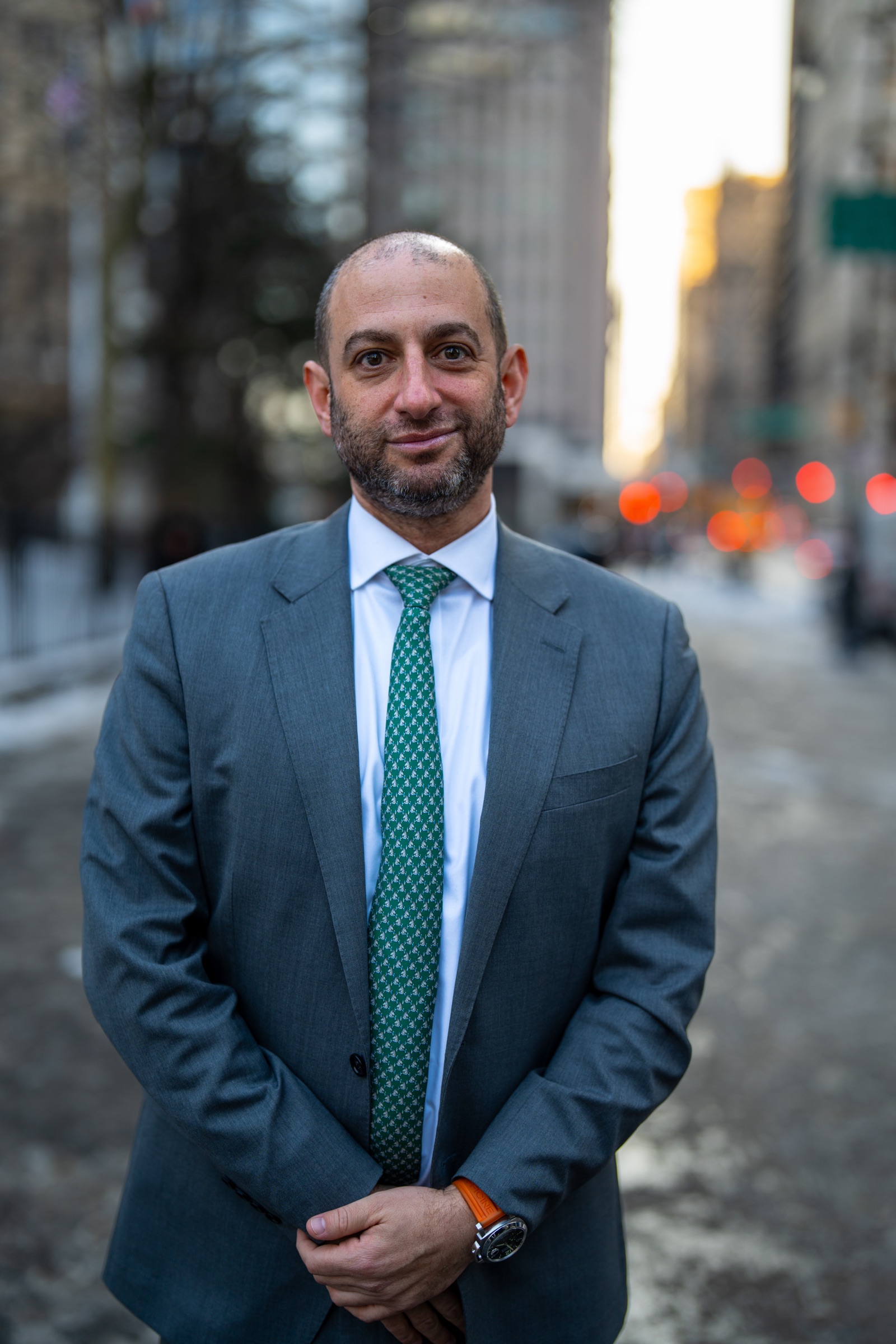
Spodek Law Group, led by managing partner Todd Spodek, defends clients in federal criminal and white collar matters.
What Should a Second Lawyer Review Before I Proffer?
A second lawyer’s review can be limited in scope. A review can examine (i) the written terms of the proffer agreement, (ii) the defendant’s potential cooperation value under the federal sentencing guidelines, or both. As a result, consulting second counsel does not itself replace the target’s counsel of record, nor does it mean that the target needs to secure a “trial-ready” attorney. Instead, it is more useful to think of it as retaining a second opinion from a federal criminal defense attorney who has substantial experience with proffers in federal district court. Indeed, ABA Model Rule 1.2(c) expressly permits the limited scope of representation, provided that the restriction is “reasonable under the circumstances” and “the client gives informed consent.” This means that engaging a second lawyer for a focused proffer review is both consistent with the Rules of Professional Conduct and common practice. A defendant can pursue this approach, and he or she can either engage second counsel for a one-time review or engage second counsel to perform a limited scope of representation for as long as necessary before deciding whether to proffer.
In order to perform a meaningful review, a second lawyer will need to conduct an analysis of both the proffer terms and the defendant’s case. This requires access to all documents that prosecutors have served in conjunction with the proffer offer. This includes:
- The proposed proffer letter, and any proposed waivers and attachments;
- The target’s previous grand jury, investigatory, and prosecutorial statements (including any notes or transcripts);
- Any charges prosecutors have already filed, and the corresponding discovery (including any notes or transcripts);
- The target’s case, and any relevant evidence; and
- Any other relevant information regarding the target’s potential cooperation value.
If a second lawyer determines that the proffer terms are unacceptable or that the defendant’s cooperation value is overvalued, the defendant’s counsel can engage with the federal prosecutor to negotiate revisions to the proffer letter. However, this process is subject to the practical constraints of dealing with the federal government. No federal rule requires prosecutors to negotiate the terms of their proffer agreements, and even if a prosecutor agrees to entertain revisions, it remains within the prosecutor’s discretion whether to include the language the defendant and his or her counsel request. Also, there are no federal rules governing the timeline for federal proffers. As a result, defendants may have weeks, days, or just hours to decide whether to participate in a proffer, and prosecutors are not obligated to extend these deadlines.
Is an Attorney Proffer Safer than Appearing Myself?
Some proffer letters state that anything the defendant’s counsel says during the proffer will be attributable to the defendant, and they might impose identical rules for any voluntary disclosures made by the defendant himself or herself. If the proffer letter limits the defendant’s participation to his or her attorney, the defendant’s attorney will present a summary of the defendant’s disclosures without the defendant attending. This type of session is often referred to as an “attorney proffer.” This does not mean that an attorney proffer is inherently “safer” for targets and defendants. Rather, the protections of an attorney proffer are subject to the same terms, conditions, exceptions, and carve-outs as those of a direct proffer.
In a typical federal proffer session, federal prosecutors and agents will both attend, and they will ordinarily document all information provided during the session (including, but not limited to, the defendant’s factual statements, the defendant’s assessment of his or her cooperation value, and any information obtained from any other individuals). While a lawyer’s authorized factual statement is not generally admissible against his or client at trial, this is subject to various exceptions and carve-outs. For example, a lawyer’s authorized factual statement may qualify under Federal Rule of Evidence 801(d)(2)(C) as the client’s admission.
If federal prosecutors and agents are using the proffer session to assess the defendant’s credibility and the informational value of his or her disclosures, federal investigators should not, themselves, make an error and trigger civil or criminal liability. However, if a defendant speaks at a proffer session, there are two ways in which he or she can get into trouble (besides triggering admissibility under his or her proffer agreement):
- Making “materially false statements” or “concealing” information during an investigation can constitute a violation of 18 U.S.C. § 1001. Note that this statute does not require a defendant to make a false statement “under oath.”
- Perjury is another possibility, but for this to qualify, a defendant must make a false statement that is subject to a federal perjury statute. As a result, generally speaking, prosecutors must find evidence of a false statement that was made under oath.
Will My Second-Opinion Consultation Stay Confidential and Conflict-Free?
If I don’t hire the lawyer for the second opinion, is my consultation still protected by the attorney-client privilege?
Yes. As a general rule, if a client seeks legal advice from an attorney, the privilege protects any confidential communications made during the consultation, regardless of whether the attorney is eventually retained. This reflects the importance of preserving the confidentiality of communications made for the purpose of seeking legal advice. This principle is recognized by the legal community, and it is codified in ABA Model Rule 1.18, which is entitled “Duties to Prospective Clients.” This rule applies whether or not the lawyer is actually retained as counsel.
What if the lawyer gets some “confidential information” that is “significantly harmful” to me?
Under Model Rule 1.18, a lawyer is permitted to represent another person if it doesn’t use that “significantly harmful” information, or if the lawyer’s prior client has given informed consent. But if the lawyer does use “significantly harmful” information, this can trigger disqualification under Model Rule 1.18(c).
What if the second opinion lawyer has represented the person I want to cooperate against?
That’s where things can get a lot more complicated. If a second opinion lawyer represents the person the defendant intends to cooperate against, then taking a second opinion would present a direct conflict of interest under ABA Model Rule 1.7. A direct conflict of interest is only permitted under certain conditions, and it can only be cured with informed written consent.
Are there other conflicts that a second opinion lawyer must evaluate?
Yes. In addition to current clients, a second opinion lawyer must ensure that he or she doesn’t have any former-client conflicts under ABA Model Rule 1.9. As a result, you can be sure that we will run a thorough conflicts check before providing you a second opinion.
What Can I Do If Prosecutors Violate the Agreement?
What if my proffer agreement is not enforceable?
What if my proffer statements are used after the government agrees to cooperate?
Contact a Federal Criminal Defense Attorney
Nothing here is legal advice, and the details of your case matter. Todd Spodek and Spodek Law Group take federal criminal and white collar cases nationwide, from offices in New York, Brooklyn, Queens and Los Angeles. You can reach the firm at 212-300-5196.
Reading is good. Calling is better.
Answered within 24 hours, guaranteed. Some stories are better told out loud -
212 300 5196