Maximum Prison Sentence for EIDL and PPP Loan Fraud.
What is the Maximum Prison Sentence for PPP or EIDL Fraud?
PPP and EIDL fraud are not standalone offenses under federal criminal law. Instead, the federal government prosecutes these and other types of fraudulent actions by alleging one or more of the various federal crimes that can be used to pursue fraud-related criminal charges. In practice, this means that the statutory maximum prison sentence is dependent on what offense(s) the DOJ prosecutor charges in the case.
The DOJ most commonly charges wire fraud (18 U.S.C. § 1343) and bank fraud (18 U.S.C. § 1344). Under section 1343, a conviction ordinarily carries a statutory maximum of 20 years of federal imprisonment; however, the statute also states that this increases to a maximum of 30 years if the violation occurs in relation to, or involves any benefit connected with, a presidentially declared major disaster or emergency, or affects a financial institution. Under section 1344, a conviction of bank fraud carries a statutory maximum of 30 years of federal imprisonment.
Again, however, there is a difference between a defendant’s statutory maximum prison sentence and the actual sentence that is likely to be imposed. In federal cases, the judge determines the sentence based on the Federal Sentencing Guidelines, which utilize the following calculation:
Offense Level = [Base Offense Level] + [Enhancements], [Mitigating Factors]
The “base offense level” is determined based on the specific offense charged. If the defendant is then sentenced under the Federal Sentencing Guidelines, the court will take this number and adjust it based on the specific facts of the defendant’s (and/or his/her company’s) conduct and other mitigating and aggravating factors. For example, the amount of loss and, where applicable, the number of victims or other specified offense characteristics can push the sentencing range upward. Meanwhile, defendants who have no prior record, who accept responsibility, who surrender funds to the government promptly, and who cooperate fully with federal authorities can expect downward adjustments to their sentence. This shows that although the statutory maximum prison sentences for wire and bank fraud appear to be particularly severe, the actual sentence that will be imposed will be highly specific to the facts and circumstances involved.
Which PPP and EIDL Application or Spending Allegations Can Become Federal Charges?
One significant difference between PPP loans and EIDL loans is that PPP loans were forgivable in some circumstances. PPP loans could have been forgiven by the government when the federal government’s conditions for forgiveness were met. EIDL loans, on the other hand, were repayable to the Small Business Administration and generally were not forgivable.
Within the PPP program, eligibility for forgiveness was limited to specified payroll and operating expenses. Specifically, historically, PPP borrowers were required to use at least 60 percent of their loan proceeds for payroll purposes (and 40 percent or less for all other eligible expenses) to be eligible for forgiveness. These rules were subject to modification, and a number of allegations have been pursued by the DOJ against borrowers who allegedly sought forgiveness for PPP loans in violation of these requirements.
Currently, with forgiveness no longer available under the PPP program, many of the DOJ’s recent cases center on alleged improprieties within the application process and the subsequent use of PPP loan proceeds for non-eligible expenses. When you are facing allegations of PPP fraud, we can work with you to determine the most effective ways to avoid facing allegations of PPP fraud, and the reasons why prosecutors have overreached in many of the federal government’s PPP loan cases.
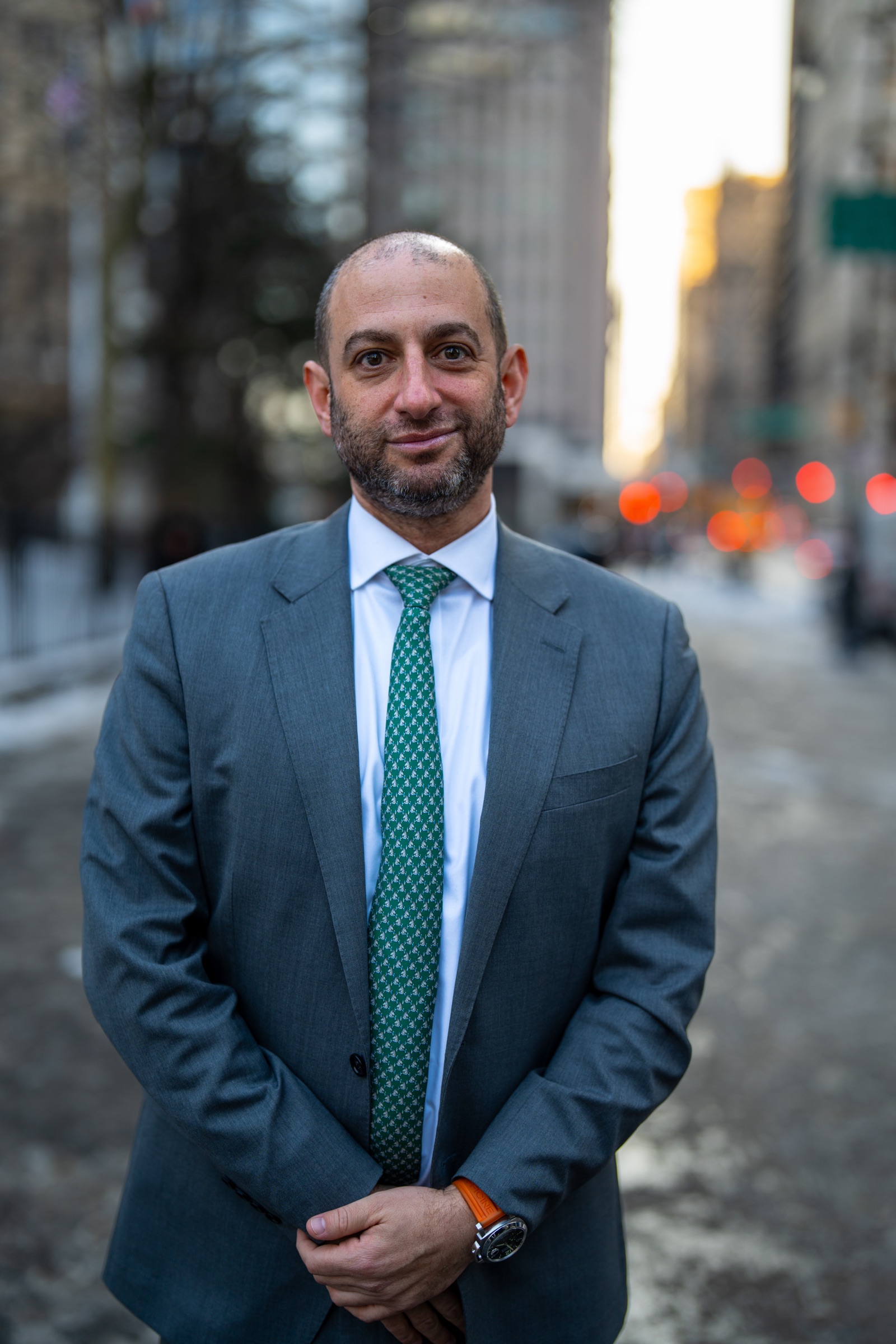
“I am a straight shooter,” Todd Spodek says of his own practice. “I tell clients exactly where their case stands.”
How do loss, entitlement, and cooperation change the sentence beyond the statutory maximum?
Federal criminal sentencing is conducted based on the federal sentencing guidelines, which utilize the defendant’s criminal history category and the offense level to determine a sentencing range. For cases of alleged fraud and similar offenses, calculations under the federal sentencing guidelines generally begin by determining the amount of “loss” (or “intended loss”) involved (Guideline §2B1.1). The “loss” refers to the greater of actual loss (i.e., the reasonably foreseeable pecuniary harm that resulted from the offense) or intended loss (i.e., the pecuniary harm that the defendant purposely sought to inflict), and this is then used to determine an enhancement to the sentencing range.
In many cases involving PPP or EIDL fraud, the government will argue that the amount of “loss” is the full value of the fraudulently obtained loan and/or that the loss includes any amount the defendant spent improperly. However, in many cases, defendants can contest this determination. For example, even if defendants admit to fraudulent conduct in the application process, the government’s proposed loss amount should be corrected to reflect the amount for which the defendant was actually entitled to qualify.
Additionally, in order to avoid additional enhancements (which can push the sentencing range closer to the statutory maximum), defendants should also work with the government to determine what qualifies as a mitigating factor. There are many mitigating factors that can result in a downward departure or variance, and they can be difficult to assert successfully if not properly communicated to prosecutors.
Even if the federal sentencing guidelines’ calculated offense level and criminal-history category would result in a particular sentencing range, federal judges still have the ability to impose sentences that are either above or below this range. While federal judges are required to consider the sentencing guidelines and must explain the sentence imposed, including any variance from the Guidelines range, they are not bound by the guidelines, and they are permitted to award probation even in cases with a significant prison range under specific circumstances.
With that in mind, it is critical for defendants to have an effective PPP and EIDL fraud defense that focuses not only on seeking a dismissal or acquittal; but, if necessary, also on ensuring that all relevant sentencing considerations are considered by federal judges.
What do reported PPP prison sentences actually show about average outcomes?
Although the statutory maximum prison sentence for wire fraud or bank fraud is 20-30 years, the statutory maximum is not the average sentence, and it does not represent the federal sentencing guideline’s suggested range or a criminal defendant’s expected sentence in a case of alleged PPP fraud. Currently, there is no available peer-reviewed research that establishes what the average national sentencing range is, and any claims about a reliable national average are, at best, speculative.
In research that examined PPP and EIDL fraud sentencings on an individual case-by-case basis (though this research was non-exhaustive in nature), a substantial majority of examined PPP and EIDL fraud cases resulted in federal prison sentences of multiple months or years. By contrast, probation was reportedly only awarded in two of the examined cases.
For example, Ganell Tubbs was recently sentenced to 41 months of federal imprisonment, three years of supervised release, and restitution for fraudulently applying for and receiving more than $2 million in PPP loan proceeds and fraudulently spending PPP proceeds in violation of the program’s requirements.
Are PPP Loan and EIDL Fraud Allegations a Federal Crime?
Again, strictly speaking, PPP and EIDL fraud are not “crimes” in the way that bank robbery or money laundering are crimes. Instead, they are labels that are applied to the federal government’s charges under various federal fraud statutes. To date, federal prosecutors have most commonly charged alleged PPP and EIDL fraud under federal laws prohibiting wire fraud (18 U.S.C. § 1343), bank fraud (18 U.S.C. § 1344), and conspiracy to defraud the United States (18 U.S.C. § 371). However, these are the primary offenses; not all alleged PPP and EIDL fraud cases involve allegations of wire, bank, or conspiracy fraud.
When can pandemic-loan fraud still be prosecuted or pursued under the False Claims Act?
Federal criminal statutes of limitations generally run five years from the date of the offense. However, there are various exceptions to this general rule, including for crimes such as bank fraud (which has a ten-year statute of limitations under 18 U.S.C. § 3293) and wire fraud that affects a financial institution (which, under 18 U.S.C. § 3293, is subject to a 10-year statute of limitations).
Additionally, following the COVID-19 pandemic, Congress extended the statute of limitations for offenses prosecuted under various pandemic-relief legislation, including both PPP and EIDL fraud, to ten years. With the 10-year pandemic extension, the federal government is entitled to pursue criminal charges for PPP, EIDL, and other pandemic loan fraud for up to ten years after the offense was committed.
The federal government also has a robust False Claims Act litigation unit and is pursuing various civil actions for PPP and EIDL fraud and other similar offenses. When facing civil allegations, it is also critical to determine whether the federal government is pursuing the case under its own authority or if the case is a qui tam proceeding initiated by a private whistleblower.
As a result of this broad authority, any concerns about the federal government’s ability to pursue charges or civil litigation due to the passage of time must be carefully examined by experienced counsel.
Speak With Counsel Before You Answer Anything
If agents have contacted you, the order matters: counsel first, answers second. Spodek Law Group has been practicing since 1976 and defends federal matters nationwide, coast to coast, from offices in New York, Brooklyn, Queens and Los Angeles. Call 888 348 8028.
Reading is good. Calling is better.
Answered within 24 hours, guaranteed. Some stories are better told out loud -
212 300 5196