Central Park After Hours.
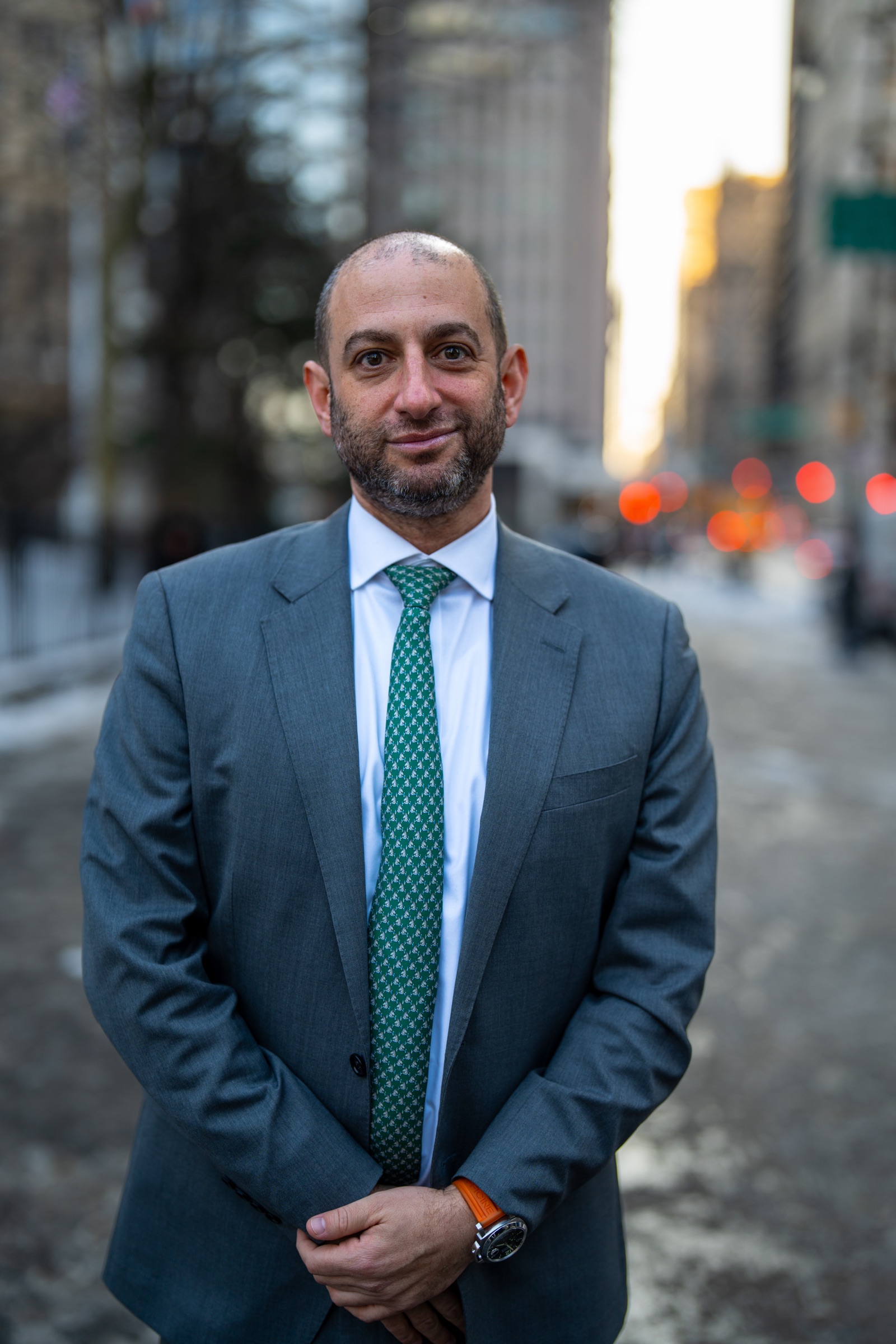
There is no objective ranking that identifies the best New York City criminal-defense attorney. While certain attorneys or firms may attempt to brand themselves as the “best” or “top-rated” in the area, these descriptors are not based on any objective or standard measurement. When facing a federal emergency involving the U.S. Attorney’s Office or one of its Assistant U.S. Attorneys at night or on the weekend, it is critical that you speak to an attorney who is prepared to act immediately to protect your interests. A strong criminal-defense attorney will promptly identify the urgent issues involved in your case, evaluate the specific circumstances at hand, and execute the appropriate immediate actions. You should rely on an attorney’s proven professional qualifications and case results, and these factors must be independently verified rather than accepted based on promotional content.
Because attorneys do not have standard outcomes, trial rates, fee structures, response times, and other relevant data, it is impossible to compare them on an objective basis. The superlatives “best,” “top-rated,” “best-rated,” and “premier” are often used in legal marketing, but these descriptors do not independently establish a comparative advantage from other competent lawyers or law firms. They are subjective and lack empirical support.
Likewise, while testimonials, ratings, awards, and claimed results provide insight, they do not independently establish a particular attorney’s ability to effectively and successfully handle complex criminal litigation. The quality of legal representation should be evaluated through an objective assessment of an attorney’s skills, experience, and commitment to achieving successful outcomes. This assessment should be accompanied by a clear and direct explanation of what a client can expect from an attorney’s services.
As with other aspects of criminal defense, no attorney’s past case results can guarantee a similar outcome in a future criminal prosecution. Every case is unique; a successful outcome in the past does not predict how a case will proceed in the future.
When deciding who to hire for after-hours criminal defense in New York City, look for an attorney who offers a high degree of availability and demonstrates an in-depth understanding of your unique circumstances and legal needs. At Spodek Law Group, we help clients make informed choices by providing thorough and objective evaluations of the legal issues involved in each individual case, allowing our clients to select the best possible representation based on their specific circumstances.
How Does After-Hours Criminal-Defense Coverage Work Before a New York Arraignment?
Under New York Criminal Procedure Law § 140.20(1), after performing the required preliminary police duties, the arrested person must be brought before a local criminal court without unnecessary delay. This statute governs the procedure after a warrantless arrest by a police officer in New York City and throughout New York State. While defendants who receive a desk appearance ticket will be required to make a personal appearance at a later date, the statute’s timing requirement applies to arrests covered by subdivision one. Most New York City criminal defendants will have their booking, processing, and arrest information handled at Central Booking.
Depending on the lawyer, “weekend legal coverage” or “24/7 legal coverage” for emergency arrests and arraignments can mean different things. It could mean that law firms or law offices will have a trained intake professional available to answer the phone 24/7, or it could mean that a criminal-defense attorney will be available to speak to you personally, or it could mean that a criminal-defense attorney will be available to represent you in court at night or on the weekends. Before selecting a lawyer to represent you in an emergency criminal case, it is critical to know precisely what is included in any alleged coverage, or to have an informed discussion regarding what is included in your legal services agreement.
For example, when considering a lawyer who claims “weekend availability,” it is important to ask specifically what this means. It might mean that the lawyer is available to receive your call or return your call on the weekend, but this could not necessarily include being available to make a prompt personal appearance in court on a Saturday or Sunday night. This distinction is important to ensure you are getting the type of legal coverage you need.
For the same reason, just because a law firm or attorney claims “24/7 intake” for emergency arrest cases, this does not mean that the law firm or attorney will be available to speak to you personally in relation to your case, or make personal courtroom appearances, on the weekends or after hours. It is a common assumption that “24/7 intake” includes an attorney who will be available to assist you, but the only way to know for sure is to ask. You must rely on the specific terms and conditions of your legal services agreement to know what to expect.
Spodek Law Group states its position plainly on its own front page: we owe loyalty to only you.
Which Case Characteristics Can Make a New York Criminal Prosecution Harder to Defeat?
Many people mistakenly believe that a criminal case begins when the police make an arrest or a prosecutor files charges. However, a criminal investigation can begin much earlier. Police may seek a statement, a search warrant, or the ability to examine an electronic device (or other materials), or an assistant United States attorney may issue a subpoena. At this stage, a defendant can face collateral consequences, and a prosecutor can get an impressive initial look at the case, before the defendant has the opportunity to establish a strong criminal defense.
In many cases, the process goes no further than a grand-jury indictment. A grand jury determines whether sufficient evidence exists to issue a formal indictment. Unlike other courtroom proceedings, grand-jury proceedings are exclusively prosecutor-driven, and defense attorneys are not permitted to have their clients present the defense side of the story. Additionally, grand-jury proceedings generally do not provide the ordinary opportunity to cross-examine prosecution witnesses. This one-sided approach makes it uniquely difficult for the defense to counter arguments that may be being used to secure an indictment.
When facing a criminal prosecution, an informed defense team will look beyond the government’s accusations and launch a targeted and efficient investigation into the case. The defense investigation involves carefully preparing and examining witnesses, analyzing electronic records, evaluating forensic evidence, and assessing police conduct in order to uncover any evidence the prosecution has overlooked or ignored. This information will also help the defense determine whether to pursue a suppression motion or a motion to dismiss.
A motion to suppress involves a request to the presiding judge to exclude evidence that has been obtained in violation of the law, for example, through an unlawful search, seizure, or warrantless warrant, among others. If a motion to suppress is granted, the evidence will be excluded from the prosecution’s case, which may necessitate the prosecution drop the charges entirely.
Each federal criminal case demands a unique defense strategy based on a case-specific analysis of all available facts, including the evidence in the defendant’s possession, the evidence in the government’s possession, and any other relevant information. While the elements of a criminal offense can establish a basic framework for the defense, the strength and viability of a defense are heavily dependent on the facts at hand. The strength of an attorney’s proposed defense will depend on the specific evidence available, and it will also rely heavily on the attorney’s experience and skill set with regard to relevant aspects of criminal defense practice.
What Can the 80/20 Rule Mean When Comparing NYC Criminal-Defense Lawyers?
The 80/20 rule is the principle that the top 20 percent of efforts will lead to 80 percent of results. When comparing New York City criminal-defense lawyers, the principle suggests that the majority of the differences will be negligible, and a few specific differences can play a critical role. The best defense attorneys will have the skills and experience to identify those few key differences that will set them apart from the rest of the defense bar.
One common claim that New York City criminal-defense lawyers make is that they are familiar with the local court, including the procedures, judges, prosecutors, courthouse practices, and the specific criminal statutes in play. But “familiarity” is not a clear-cut term that allows for comparison between criminal-defense lawyers. To evaluate a claim, you must seek out concrete details. For example, find out the attorney’s years of experience, case outcomes, award-winning results, or other concrete indicators of a positive result.
Many law firms also market their former-prosecutor credentials. While these are legitimate credentials that will provide valuable insight in many cases, having former-prosecutor experience is not a direct indicator of a lawyer’s effectiveness at handling your case. The fact that a law firm is “best rated,” “top-rated,” “best-rated,” and “premier” means that they do not have an objective rating system that ranks criminal-defense lawyers in order of comparative effectiveness.
Similarly, online testimonials, lawyer awards, ratings, endorsements, and claimed trial rates also do not provide a clear picture of what kind of result to expect. For example, a defense team that reports a 70% trial rate might look more “experienced” than a defense team that reports a 60% trial rate. But trial rates do not take into account the specific case details, the defendant’s background, the judge, prosecutors, laws, and legal standards in play, making this claim essentially meaningless.
Talk to Spodek Law Group
Every case turns on its own facts, and general information is no substitute for advice about yours. Todd Spodek, managing partner of Spodek Law Group, and the firm's attorneys defend federal criminal and white collar matters nationwide. Reach the firm at 888 348 8028.
Reading is good. Calling is better.
Answered within 24 hours, guaranteed. Some stories are better told out loud -
212 300 5196