





Federal Criminal Appeals
Most federal convictions survive appeal. The reversal rate across the circuit courts hovers near five percent in criminal matters, a statistic that conceals the degree to which appellate outcomes depend on decisions made months or years before any brief is filed. What determines whether a conviction withstands scrutiny is not the strength of appellate argument alone but the condition of the record from which that argument must be constructed.
The structure of a federal criminal appeal is fixed by the Federal Rules of Appellate Procedure. Under Rule 4(b), the defendant must file a notice of appeal within fourteen days of the entry of judgment. That period is jurisdictional. A filing one day late can extinguish the right to appellate review entirely, regardless of the merit beneath it. The court may grant an extension of up to thirty additional days, but only on a showing of excusable neglect or good cause, standards interpreted with considerable strictness.
Once the notice is filed, the appeal proceeds to one of the thirteen federal circuit courts. A panel of three judges reviews the trial record. No new evidence is admitted. No witnesses testify. The proceeding is an examination of what occurred below, confined to the paper record and the legal arguments presented in the parties’ briefs. Oral argument, when permitted, is brief. Many appeals are resolved on the briefs alone.
The scope of that review depends on preservation.
Federal Rule of Criminal Procedure 51 requires that objections be stated with specificity and timeliness sufficient to apprise the trial court of their basis. An objection must be contemporaneous with the alleged error. It must identify the legal ground. The court must rule on it. Where any of these elements is absent, the issue is considered forfeited on appeal. This is the architecture of preservation: three requirements, each independent, each capable of foreclosing an entire line of argument.
The consequence of forfeiture is plain error review under Rule 52(b). The test, articulated in United States v. Olano, 507 U.S. 725 (1993), imposes four conditions. The error must not have been affirmatively waived. It must be obvious. It must have affected the defendant’s substantial rights. And the appellate court must conclude that failing to correct it would seriously affect the fairness, integrity, or public reputation of judicial proceedings. Each element is conjunctive. The defendant who did not object at trial carries a burden that most cannot satisfy.
There is a particular cruelty in this. The defendant who was poorly represented at trial often cannot demonstrate plain error on appeal because the record, shaped by that same deficient representation, lacks the content necessary to establish prejudice. The absence of an objection is itself evidence of nothing, or of everything.
Ineffective assistance of counsel presents its own procedural demands. The framework is Strickland v. Washington, 466 U.S. 668 (1984), and its two-part test has governed Sixth Amendment claims for four decades. The defendant must show that counsel’s performance fell below an objective standard of reasonableness and that the deficient performance created a reasonable probability of a different outcome. Courts apply a strong presumption that trial counsel’s choices reflected sound strategy. The prejudice prong requires more than speculation. It requires a demonstration that the error was consequential to the verdict or the sentence, measured against the totality of the evidence.
Strickland claims are difficult to raise on direct appeal because the appellate record rarely contains the information necessary to evaluate what trial counsel knew, considered, or intended. Circuit courts routinely decline to address ineffective assistance on direct review for this reason, reserving the question for collateral proceedings where the record can be developed through evidentiary hearing.
Need Help With Your Case?
Don't face criminal charges alone. Our experienced defense attorneys are ready to fight for your rights and freedom.
- 100% Confidential
- Response Within 1 Hour
- No Obligation Consultation
Or call us directly:
(212) 300-5196That collateral vehicle is 28 U.S.C. Section 2255.
A Section 2255 motion permits a federal prisoner to challenge a conviction or sentence on the ground that it was imposed in violation of the Constitution or the laws of the United States, that the court lacked jurisdiction, that the sentence exceeded the statutory maximum, or that the conviction is otherwise subject to collateral attack. The motion must be filed in the district court that entered the judgment. The statute of limitations is one year, running from the date the judgment becomes final, or from the date on which certain triggering events occur: the removal of a government-created impediment, the Supreme Court’s recognition of a new constitutional right made retroactive to cases on collateral review, or the discovery of facts supporting the claim through due diligence.
Second or successive Section 2255 motions require certification from the court of appeals. The gatekeeping provision demands that the motion contain either newly discovered evidence sufficient to establish by clear and convincing evidence that no reasonable factfinder would have found the defendant guilty, or a new rule of constitutional law made retroactive by the Supreme Court. This barrier is substantial. It exists because finality in criminal proceedings serves interests that the law has chosen to protect even at the cost of individual claims.
Recent developments in federal appellate law have reconfigured portions of sentencing doctrine. In Erlinger v. United States, decided June 21, 2024, the Supreme Court held that the Fifth and Sixth Amendments require a unanimous jury to determine beyond a reasonable doubt whether prior offenses were committed on separate occasions for purposes of the Armed Career Criminal Act. The decision, authored by Justice Gorsuch and joined by five other justices, vacated a fifteen-year sentence imposed on a defendant whose prior burglary convictions had been assessed by a judge under a preponderance standard. The holding extended Apprendi v. New Jersey‘s principle that any fact increasing the prescribed range of penalties must be submitted to a jury. For defendants sentenced under the ACCA, Erlinger opens the possibility of resentencing where the occasions finding was made by the court rather than the jury.
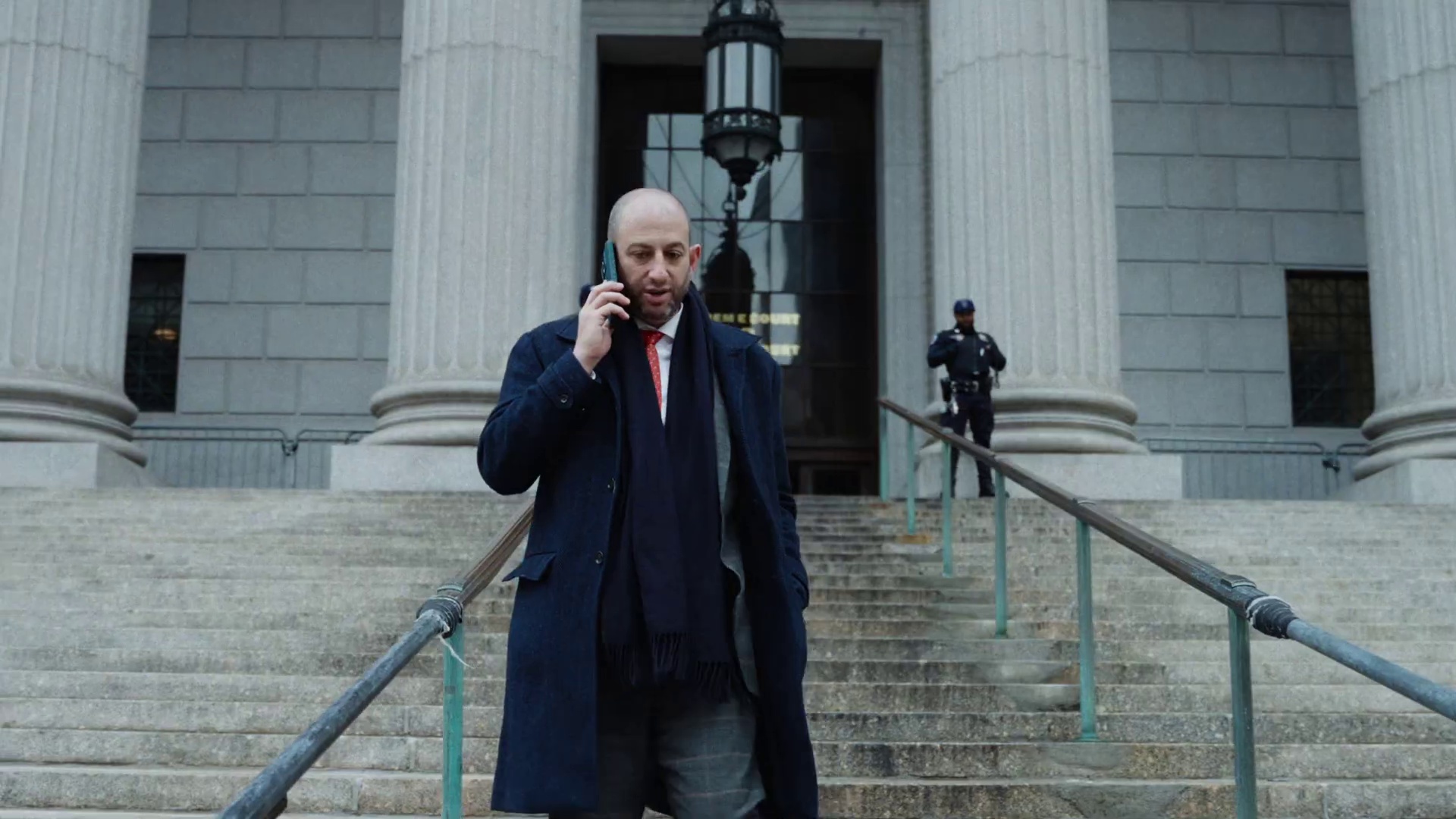
Todd Spodek
Lead Attorney & Founder
Featured on Netflix's "Inventing Anna," Todd Spodek brings decades of high-stakes criminal defense experience. His aggressive approach has secured dismissals and acquittals in cases others deemed unwinnable.
The Supreme Court has also tightened its supervision of habeas proceedings in the lower courts. In Clark v. Sweeney and Klein v. Martin, the Court summarily reversed the Fourth Circuit’s grants of habeas relief to state petitioners, reaffirming that the Antiterrorism and Effective Death Penalty Act requires federal courts to give substantial deference to state court adjudications on the merits. The signal is one of constraint. Federal courts reviewing convictions on collateral attack are not to substitute their judgment for that of the court that tried the case.
Between these poles sits the work of appellate advocacy in a federal criminal matter. The identification of error is only the beginning. The classification of that error matters as much as its existence. Constitutional errors are subject to harmless error analysis under Chapman v. California, 386 U.S. 18 (1967), which places the burden on the government to prove the error was harmless beyond a reasonable doubt. Nonconstitutional errors are reviewed under the standard of Kotteakos v. United States, 328 U.S. 750 (1946), which asks whether the error had a substantial and injurious effect on the verdict. Structural errors, a narrow category, require automatic reversal. The distinction between these categories can determine the outcome of the appeal before the merits are ever considered.

A federal agent calls you and says they "just want to ask a few questions" about a business transaction.
Is it safe to talk to them informally?
There is no such thing as an informal conversation with a federal agent. Under 18 U.S.C. 1001, making any false statement to a federal agent is a felony, even without being under oath. Always consult an attorney before speaking with investigators.
This is general information only. Contact us for advice specific to your situation.
What follows from this is a principle that governs the entire enterprise: the appeal begins at trial. Every motion filed, every objection raised or declined, every stipulation entered and every proffer refused constitutes the material from which appellate counsel must work. A record that is thin on preserved error is a record that constrains the appeal to plain error review, where reversal is the exception and affirmance the rule.
The attorneys at Federal Lawyers represent defendants in federal criminal appeals at every stage of the process, from the filing of the notice of appeal through briefing and oral argument in the circuit courts, and in post-conviction proceedings under Section 2255. The firm maintains offices in New York City, Los Angeles, and Miami, and accepts federal appellate matters from every jurisdiction in the country. A consultation can be arranged by contacting the firm at 212-300-5196.