






The accusation itself functions as a conviction in the public record, and the government knows this before the indictment is unsealed.
Federal prosecutors label investment fraud a “Ponzi scheme” not because the designation carries independent legal force but because it carries independent rhetorical force. The term summons a particular cognitive frame in jurors, in judges, in the press. Once the label attaches, the defense is not contesting charges alone. It is contesting a metaphor. Charles Ponzi died in a charity ward in Rio de Janeiro in 1949. His name, seventy-seven years later, remains the most effective single word in the government’s vocabulary for financial crime.
The distinction between a failed investment and a federal offense is measured in a single element: intent.
What the Government Charges and How It Builds the Case
There is no federal statute titled “Ponzi scheme.” The criminal conduct is prosecuted under wire fraud (18 U.S.C. Section 1343), mail fraud (Section 1341), securities fraud (15 U.S.C. Section 77q and Section 78j(b)), money laundering (18 U.S.C. Section 1956), and conspiracy (Section 371). A single indictment may contain all of these. In the Southern District of New York in September 2025, the government charged a defendant in connection with a scheme that caused over $50 million in investor losses, stacking wire fraud counts against securities fraud counts against money laundering counts in a structure designed to produce consecutive sentences.
The architecture of these prosecutions follows a pattern. The SEC files a parallel civil action, often first, seeking asset freezes and the appointment of a receiver. A receiver seizes records and bank accounts. The DOJ opens its criminal investigation using the same financial records the receiver has already organized. The defendant faces simultaneous proceedings in which the civil case generates discovery that the criminal case consumes. The Fifth Amendment right against self-incrimination collides with the civil obligation to respond. This collision is not an accident of procedure. It is a feature.
In 2025, the SEC charged a Pennsylvania resident and his companies with operating a scheme that raised more than $770 million from approximately 2,700 investors, many of them members of Amish and Mennonite communities in Lancaster County. The same year, a Georgia operation defrauded 300 investors of $140 million by promising 18 percent returns from bridge loans that did not exist. Three Texas defendants raised $91 million through guaranteed monthly payments of three to six percent. The common thread is the promise of consistency. Real investments do not guarantee returns. Fraud does.
The Intent Element and the Space It Creates
To convict on wire fraud, the government must prove specific intent to defraud. This is not negligence. This is not mismanagement. This is not optimism that proved unfounded. The defendant must have known the representations were false at the time they were made and must have made them with the purpose of obtaining money or property from investors.
That standard creates a field of contest larger than the government would prefer.
A fund manager who believed, with whatever degree of error, that the investment strategy was viable has not committed fraud. A defendant who used new investor funds to cover short-term obligations while pursuing a legitimate business model occupies contested ground. The government will characterize every distribution to earlier investors as a “lulling payment.” The defense will characterize the same distribution as an interim payment made during a period of restructuring. The characterization that prevails depends on the quality of the evidence and the specificity of the defense.
In United States v. Cassese, the Second Circuit reversed a fraud conviction where the trial court had excluded evidence of the defendant’s good faith belief in the viability of the business. The exclusion was prejudicial because it prevented the jury from evaluating the one element that separated crime from commerce. Good faith is not an affirmative defense. It is a negation of the government’s burden. The distinction matters at trial. It matters more at the charging stage, where a persuasive presentation of good faith evidence to the prosecuting attorney may prevent an indictment from issuing at all.
The Sentencing Calculation and Its Severity
Congress did not need to create a separate penalty for Ponzi schemes because the existing sentencing structure already produces extreme results. Under Section 2B1.1 of the Sentencing Guidelines, the loss table adds offense levels based on the amount of investor loss: losses exceeding $9.5 million add twenty-two levels. Losses exceeding $65 million add twenty-six. A base offense level of seven, combined with a twenty-six level enhancement for loss, two levels for sophisticated means, two levels for mass marketing, and four levels for a leadership role, produces a total offense level that corresponds to a Guidelines range measured in decades.
The numbers from 2024 and 2025 confirm the pattern. A New Jersey defendant convicted in a $44 million scheme received thirty-seven years. A Florida woman who administered a $200 million operation received twenty years on a single conspiracy count. A cryptocurrency scheme promoter in the Southern District received twenty years for a scheme targeting Spanish-speaking investors. An Indonesian national was sentenced to eighteen years for a $24.5 million fraud and ordered to pay $8.5 million in restitution and $7.5 million in forfeiture.
These are not sentences for violence. They are sentences for financial crime, imposed by a Guidelines system that treats loss amount as a proxy for culpability with almost mechanical indifference to individual circumstances.
Variance from the Guidelines range is possible. It is not common. And the motion for variance begins with the sentence calculation itself, which means the defense of a Ponzi case at sentencing is, in substantial part, a contest over accounting.
Clawback Actions and the Second Prosecution
The criminal case is not the only proceeding that destroys a defendant’s financial existence. Once a receiver or bankruptcy trustee is appointed, clawback litigation begins. The trustee sues investors who received distributions exceeding their principal, recovering the “profits” those investors believed they had earned. In some circuits, the trustee recovers principal as well.
Need Help With Your Case?
Don't face criminal charges alone. Our experienced defense attorneys are ready to fight for your rights and freedom.
- 100% Confidential
- Response Within 1 Hour
- No Obligation Consultation
Or call us directly:
(212) 300-5196A defendant who has already been convicted and sentenced to prison will watch, from a facility in some federal district far from home, as the trustee sues the defendant’s family members, business associates, and charitable recipients for the return of funds that passed through accounts the defendant once controlled. The trustee operates under a court order. There is no statute of limitations that constrains the receiver in the way one constrains a prosecutor. The recovery process may continue for a decade after the criminal sentence is imposed.
In 2024, nearly fifty clawback complaints were filed in federal and state courts across the country, including in fifteen federal district courts. These are civil proceedings with civil burdens of proof, but their financial consequences rival the restitution orders entered in the criminal case. The defendant is accountable in two forums for the same underlying conduct, and the doctrine of double jeopardy does not apply because one of the proceedings is classified as remedial.
The classification is correct. The effect is indistinguishable from punishment.
Where the Defense Operates Before Trial
A Ponzi scheme investigation may proceed for two years before an indictment. The SEC issues subpoenas. The FBI conducts interviews. Forensic accountants reconstruct the flow of funds through bank records the government obtained months before the target of the investigation knew an investigation existed. By the time the target receives notice, the government’s theory of the case is substantially formed.
Intervention during this period is the most productive form of defense. A presentation to the United States Attorney’s Office demonstrating that investor funds were, in fact, deployed in legitimate investments can alter the charging decision. Evidence that returns were generated, even if insufficient to cover all obligations, separates the case from the Ponzi framework and repositions it as a securities violation with a lower sentencing exposure. Documentation of the defendant’s communications with investors, showing transparency about risks rather than concealment, operates against the element of intent.
None of this is possible after indictment. The grand jury has returned its finding of probable cause. The government has committed its theory to paper. The press has published the dollar figure. At that point, the defense is conducted in a courtroom, before a jury that has already absorbed the word “Ponzi” from the indictment itself.
Early retention of counsel is not a strategic preference. It is a structural requirement.
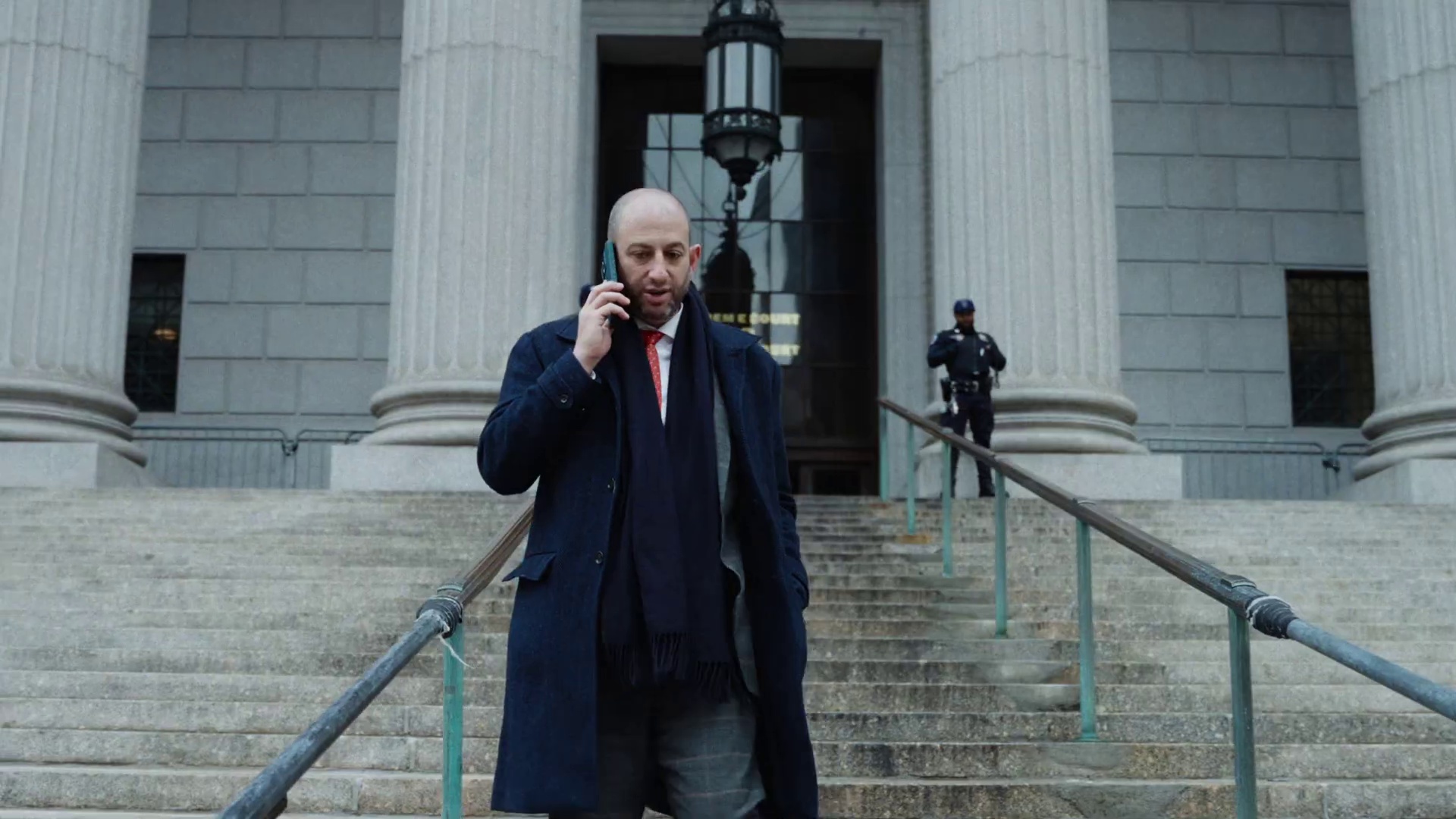
Todd Spodek
Lead Attorney & Founder
Featured on Netflix's "Inventing Anna," Todd Spodek brings decades of high-stakes criminal defense experience. His aggressive approach has secured dismissals and acquittals in cases others deemed unwinnable.
The Parallel Proceeding Problem
Defendants in Ponzi investigations face a procedural environment that functions as a form of compulsion. The SEC civil action demands testimony. The DOJ criminal action penalizes it. A defendant who invokes the Fifth Amendment in a civil deposition may avoid self-incrimination but will face an adverse inference that effectively concedes the civil claims. A defendant who testifies in the civil proceeding generates a transcript that the criminal prosecutors will read with care.
Courts have addressed this tension through stays of civil proceedings pending resolution of the criminal case. The stay is discretionary. It is not guaranteed. And even where a stay is granted, the SEC’s investigative apparatus continues to operate through its administrative subpoena authority, which exists independent of any filed action.
The coordination between agencies is real. We have seen cases in which the SEC deposition was conducted with questions that appeared drafted to produce answers useful to the criminal prosecution rather than the civil one. Whether that coordination violates due process depends on the specific facts. That it occurs is not in dispute.

A federal agent calls you and says they "just want to ask a few questions" about a business transaction.
Is it safe to talk to them informally?
There is no such thing as an informal conversation with a federal agent. Under 18 U.S.C. 1001, making any false statement to a federal agent is a felony, even without being under oath. Always consult an attorney before speaking with investigators.
This is general information only. Contact us for advice specific to your situation.
The Scope of What Is Defended
A Ponzi scheme defense is not a single proceeding. It is a set of concurrent and sequential proceedings that may include the DOJ criminal prosecution, the SEC civil enforcement action, the receiver’s clawback litigation, IRS tax fraud proceedings, state regulatory actions, and private lawsuits filed by individual investors. Each proceeding operates under its own rules, its own burden of proof, and its own timeline. A statement made in one forum travels to all of them.
Coordination of the defense across these forums is the governing requirement. A criminal defense attorney who does not account for the civil exposure, or a civil attorney who does not account for the criminal risk, is providing representation that is incomplete in a way that may prove irreversible.
This firm has represented defendants in Ponzi scheme investigations and prosecutions in the Southern and Eastern Districts of New York, in the District of New Jersey, and in federal courts across the country. The factual patterns recur: the investor who became a promoter without understanding the transition, the fund manager whose legitimate operation was contaminated by a single fraudulent component, the family member named as a co-conspirator on the basis of shared accounts and proximity. Each of these situations requires a defense constructed from the specific facts of the case, not from a template.
The consultation is the point of origin. The exposure is assessed. The proceedings are identified. The defense is constructed before the government completes its own construction. In matters involving potential sentences measured in decades and financial consequences measured in millions, the timing of that first conversation determines more than any subsequent motion. We receive these calls. The number is on this page.