Federal Tax Evasion Defense
The Government Must Prove You Intended to Cheat
Ninety percent of federal tax evasion prosecutions end in conviction. That figure, drawn from IRS Criminal Investigation’s fiscal year 2025 annual report, represents the conclusion of a selection process so exacting that fewer than 2,700 investigations are initiated each year out of the millions of returns the Service examines. The number is meant to discourage. It is meant to suggest that once the machinery begins its motion, the outcome has already been written.
It has not.
What that conviction rate obscures is the architecture of the charge itself. Under 26 U.S.C. Section 7201, the government must establish three elements: the existence of a tax deficiency, an affirmative act of evasion, and willfulness. The first two are often matters of arithmetic and documentation. The third is the ground on which cases are won and lost, because willfulness in the tax context carries a meaning found nowhere else in federal criminal law. The Supreme Court has defined it as the voluntary, intentional violation of a known legal duty. One does not stumble into that standard. The prosecution must reconstruct what you understood, what you believed, and what you chose. Every ambiguity in that reconstruction belongs to the defense.
Willfulness Is Not What the Prosecution Pretends It Is
In Cheek v. United States, 498 U.S. 192 (1991), the Court reversed a tax evasion conviction and established a principle that remains, more than three decades later, the most potent weapon available to the accused. A defendant who held a good faith belief that he was not violating the tax law cannot be convicted, even if that belief was objectively unreasonable. The standard is subjective. The jury must assess what this particular person actually believed, not what a reasonable person would have believed in similar circumstances.
This distinction matters. The Internal Revenue Code is not the criminal code. It is 2,652 sections of statutory text, supplemented by tens of thousands of pages of Treasury Regulations, revenue rulings, private letter rulings, and judicial interpretations that frequently contradict one another. Congress chose to impose criminal penalties within this system, and the Court in Cheek recognized that the complexity of the law itself generates sincere misunderstanding. A taxpayer who believed, however mistakenly, that certain income was not taxable, that a deduction was permissible, or that a reporting obligation did not apply to his particular situation possesses a defense that goes to the heart of the charge.
The Court drew one boundary. A belief that the tax laws are unconstitutional, that the Sixteenth Amendment was never properly ratified, that wages are not income under some novel constitutional theory; these are not defenses. The distinction is between misunderstanding the statute and rejecting its authority. The former negates willfulness. The latter does not.
The Affirmative Act Requirement Predates the Modern Code
Before the government reaches willfulness, it must prove an affirmative act of evasion. This requirement traces to Spies v. United States, 317 U.S. 492 (1943), where the Court held that mere failure to file a return, standing alone, does not constitute the felony of tax evasion. Something more is required: conduct whose likely effect would be to mislead or to conceal. The Court offered a catalog of such acts. Keeping a double set of books. Making false entries or false invoices. Destroying records. Concealing assets. Handling affairs to avoid making the records usual in transactions of the kind.
That catalog is instructive not only for what it includes but for what it implies about the burden the government carries. In fiscal year 2024, the median tax loss in federal tax fraud cases was $358,827. The U.S. Sentencing Commission reported 360 such cases that year, an eleven percent increase from 2020, with an average sentence of 27 months. These are not prosecutions assembled casually. IRS Criminal Investigation dedicates nearly 64 percent of its investigative resources to tax crimes, employs approximately 3,000 special agents, and in fiscal year 2025 identified $4.5 billion in tax fraud alone, a 111.8 percent increase from the prior year. The agency’s prosecution referrals to the Department of Justice increased 14 percent. Search warrants increased 25 percent.
And still the question remains whether the specific acts attributed to a specific defendant satisfy the Spies standard, or whether the government has assembled a narrative of negligence and recast it as a narrative of concealment.
Reliance on Professional Advice Is a Complete Defense
Consider the taxpayer who gives his accountant every document, discloses every source of income, answers every question truthfully, and then signs the return the accountant prepares. The return contains errors. The errors produce a deficiency. IRS Criminal Investigation opens a case. Is this tax evasion?
It is not. The advice of counsel defense, which extends to reliance on any qualified tax professional, operates to negate willfulness when the defendant made full disclosure of material facts and followed the advice received in good faith. The defense does not require that the reliance have been reasonable in some objective sense. It requires that it have been genuine. A taxpayer who handed his records to a certified public accountant and trusted the resulting return has not voluntarily and intentionally violated a known legal duty. He has delegated a technical task to a professional and accepted the professional’s judgment.
The defense fails when the disclosure was incomplete. It fails when the taxpayer knew the advice was wrong and followed it anyway as a shield. It fails when no advice was actually sought, or when the so called adviser was complicit in the scheme. But where the relationship was genuine and the disclosure was full, the defense has proven dispositive in case after case, because it severs the connection between the deficiency and the defendant’s intent.
What IRS Criminal Investigation Actually Does Before It Contacts You
By the time a special agent appears at your door or your attorney receives a target letter, the investigation has been underway for months. Sometimes years. IRS CI does not initiate contact to gather information. It initiates contact because it believes it has already gathered enough.
The process begins with a referral, often from a revenue agent conducting a civil audit who identifies what the IRS calls “badges of fraud”: unexplained increases in net worth, substantial understatement of income, implausible deductions, failure to file returns despite substantial income, two sets of records, false statements to agents, destruction of documents. No single badge is determinative. The Service looks for patterns.
Once the case is referred to Criminal Investigation, a special agent is assigned. The agent issues administrative summonses, reviews bank records, interviews witnesses, and constructs one of three methods of proof. The specific items method identifies particular unreported income. The net worth method compares changes in the taxpayer’s assets and liabilities to reported income. The bank deposits method traces funds flowing through accounts. Each method is a different angle on the same question: is there income that was received, not reported, and affirmatively concealed?
The completed investigation is referred to the Department of Justice Tax Division, which makes the final charging decision. In fiscal year 2025, IRS CI obtained convictions in 89 percent of adjudicated cases. Over the three year period from 2022 through 2024, the adjudicated conviction rate was 97.3 percent. These numbers reflect the agency’s willingness to decline prosecution when the evidence is not overwhelming, which means that the cases that do proceed are the cases the government believes it will win.
Need Help With Your Case?
Don't face criminal charges alone. Our experienced defense attorneys are ready to fight for your rights and freedom.
- 100% Confidential
- Response Within 1 Hour
- No Obligation Consultation
Or call us directly:
(212) 300-5196We have represented clients at every stage of this process, from the first summons through trial and sentencing. What matters is when representation begins.
The Sentencing Arithmetic Is Specific and Consequential
Section 7201 carries a statutory maximum of five years per count. Because each tax year can constitute a separate count, a defendant charged with evading taxes across five years faces a theoretical maximum of 25 years, though sentences of that magnitude are rare outside cases involving additional charges.
The practical sentencing range is determined by U.S. Sentencing Guideline Section 2T1.1, which sets the base offense level according to the tax loss amount. A loss of $40,000 produces a base offense level of 14. A loss of $250,000 produces a level of 20. A loss exceeding $1.5 million produces a level of 24. Enhancements apply for sophisticated means (offshore accounts, shell corporations, nominee entities), for failure to report income from criminal activity exceeding $10,000 per year, and for obstruction of justice.
For a first time offender in Criminal History Category I, a base offense level of 14 yields a guideline range of 15 to 21 months. A level of 20 yields 33 to 41 months. A level of 24 yields 51 to 63 months. Restitution is mandatory. Fines can reach $250,000. Supervised release follows incarceration.
But guidelines are advisory after United States v. Booker, 543 U.S. 220 (2005). A sentencing court must consider the factors enumerated in 18 U.S.C. Section 3553(a), including the nature of the offense, the history and characteristics of the defendant, the need for deterrence, and the need to avoid unwarranted sentencing disparities. In tax cases, where the defendant often has no prior criminal history, strong community ties, and a record of otherwise lawful conduct, departures below the guideline range are not uncommon. The question is whether the defense has given the court a reason to depart, and the preparation for that question begins long before sentencing.
Voluntary Disclosure Remains Available but the Terms Have Changed
The IRS maintains a Criminal Voluntary Disclosure Practice that permits taxpayers to come forward, file corrected returns, and pay outstanding taxes and penalties in exchange for a recommendation against criminal prosecution. The word “recommendation” is deliberate. The program does not guarantee immunity. But in practice, taxpayers who make a timely, truthful, and complete disclosure before the government has initiated an investigation are not prosecuted.
In June 2024, the IRS revised Form 14457, the disclosure application, to include a checkbox requiring the applicant to affirmatively admit willfulness under penalty of perjury. The Taxpayer Advocate Service objected. In June 2025, the IRS agreed to remove the checkbox from the next revision. On December 22, 2025, the IRS proposed further revisions to the program and opened a 90 day public comment period running through March 22, 2026. The proposed changes would reduce the disclosure period to six years, apply a 20 percent accuracy related penalty on amended returns rather than the current 75 percent civil fraud penalty, and eliminate the willful FBAR penalty for qualifying disclosures.
These are favorable developments. But they carry a condition that cannot be met retroactively. The disclosure must occur before the government contacts you. Once the investigation has begun, the door closes. And the investigation may have begun months before you learn of its existence. Between September 2018 and August 2024, the IRS completed only 161 voluntary disclosure cases. The program exists. It is underused. For the right client, at the right moment, it changes everything.
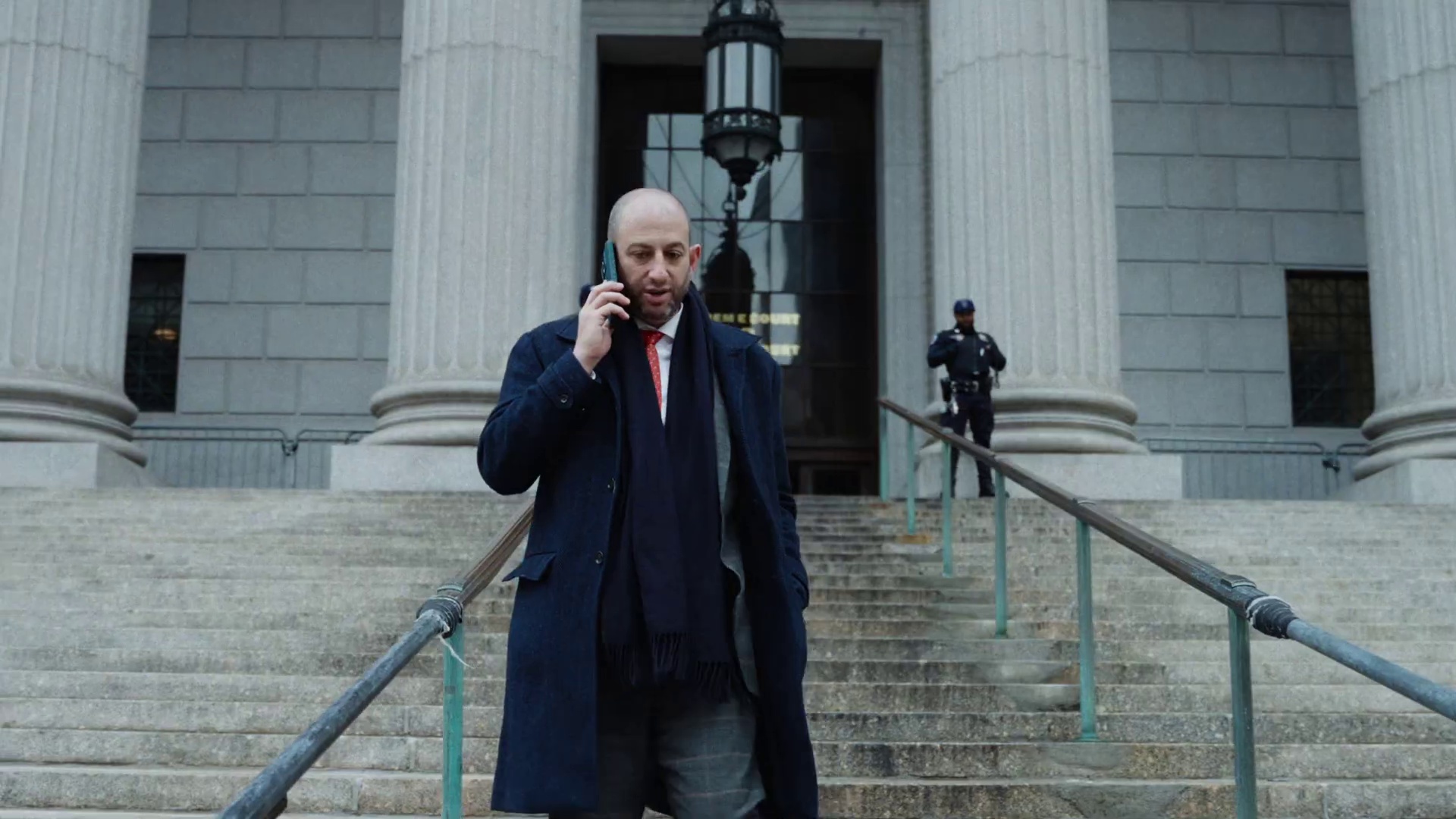
Todd Spodek
Lead Attorney & Founder
Featured on Netflix's "Inventing Anna," Todd Spodek brings decades of high-stakes criminal defense experience. His aggressive approach has secured dismissals and acquittals in cases others deemed unwinnable.
The Government’s Case Is a Construction, Not a Photograph
What does a federal tax evasion prosecution look like from inside? It looks like a story. The government selects facts, arranges them in sequence, and presents them to a jury as evidence of intentional concealment. The unreported consulting income. The cash deposits structured to avoid reporting thresholds. The offshore account the defendant did not list on Schedule B. The conversation with the accountant in which the defendant allegedly said something incriminating. The lifestyle that exceeds the reported income.
Each of these facts admits an innocent explanation. Consulting income was reported to the state but inadvertently omitted from the federal return. Deposits were structured not to evade reporting but because the client operated a cash business and made deposits as revenue was received. The offshore account held funds inherited from a foreign relative, and the client did not understand FBAR obligations. The conversation with the accountant has been reconstructed from memory and is disputed. The lifestyle reflects legitimate savings, gifts, or loans from family.
The government’s 89 percent conviction rate represents the cases where these alternative explanations were not developed in time, not presented with sufficient specificity, not supported by documentation that counsel preserved or obtained during the investigation. It does not represent a law of nature. We have seen cases referred for prosecution and declined by the Tax Division. We have seen indictments that resulted in acquittals. We have seen charges reduced from evasion to failure to file, a misdemeanor carrying a maximum sentence of one year. We have seen sentencing memoranda that persuaded judges to impose probation where guidelines called for incarceration.
In February 2024, the IRS announced a new initiative targeting individuals with incomes exceeding $1 million who had failed to file returns since 2017. Over 125,000 compliance letters were issued. That number alone indicates the scale of potential exposure, and the distance between receiving a letter and being charged with a felony.
Representation Should Begin at the First Sign of Inquiry
The taxonomy of federal tax defense is not complicated. The charge requires willfulness, and willfulness requires knowledge. The defense is the absence of that knowledge, or the presence of good faith reliance, or the insufficiency of the government’s proof of affirmative conduct. The sentencing framework is structured, calculable, and subject to departure. The voluntary disclosure program is available to those who act before the government acts first.
What is complicated is timing. The interval between the first indication that something is wrong (an unusual letter from the IRS, an inquiry directed to your bank, a grand jury subpoena served on your accountant) and the moment the government formalizes its case is the interval in which the outcome is most susceptible to influence. Documents can be preserved or they can be lost. Witnesses can be interviewed or they can be left to the government. The narrative can be shaped by the defense or it can be shaped entirely by the prosecution.
We represent individuals and businesses facing federal tax evasion investigations and charges under 26 U.S.C. Section 7201. Spodek Law Group maintains offices in New York City and provides federal criminal defense representation in every federal district in the country. To speak with an attorney about your situation, contact us at (212) 300-5196.