Federal Perjury Defense
Federal Perjury Defense
A federal perjury charge converts testimony into a separate criminal proceeding. The government does not need to prove that a false statement altered the outcome of the case in which it was given. It needs only to prove the statement possessed the capacity to influence. That distinction between actual effect and theoretical capacity is where most defendants lose their orientation and where the most consequential defense work begins.
Two statutes govern federal perjury. Section 1621 of Title 18 addresses perjury in its general form. Section 1623 addresses false declarations before a grand jury or court. Both carry a maximum sentence of five years in federal prison. Both require proof that the defendant made a false statement under oath, knew the statement was false at the time, and that the statement was material to the proceeding. The statutes differ in their evidentiary architecture. Section 1621 preserves the common law two-witness rule, which prohibits conviction on the uncorroborated testimony of a single witness. The government must produce either two independent witnesses or one witness supported by corroborating evidence inconsistent with innocence. Section 1623 eliminates that requirement. It permits the government to prove falsity through any admissible evidence, including prior inconsistent declarations under oath.
The choice of statute shapes the prosecution and the defense in equal measure.
Materiality presents itself as a factual question for the jury. The test, articulated in United States v. DeZarn, 157 F.3d 1042 (6th Cir. 1998), asks whether the false statement had “a natural tendency to influence, or was capable of influencing, the decision of the decision-making body to which it was addressed.” The government bears no obligation to demonstrate that the statement did influence the tribunal. It must show only that the statement could have done so. A false answer about a peripheral matter, one that bears no relation to the questions actually before the tribunal, may fail this test. A false answer about a matter that the tribunal could have considered, even if the tribunal would have reached the same conclusion regardless, satisfies it. The space between those two positions is narrow. Defense counsel must identify it with precision.
The intent element carries its own doctrinal weight. Perjury is a specific intent crime. The government must establish that the defendant knew the statement was false when it was made. Confusion, faulty recollection, an honest misinterpretation of an ambiguous question, a good faith belief in the truth of a statement that happened to be incorrect: none of these constitute perjury. The line between a deliberate falsehood and an inaccurate statement offered without deceptive intent is the line that separates a felony conviction from an acquittal. Prosecutors understand this. The Department of Justice has instructed its attorneys to proceed with caution in perjury cases and to be certain they can prove the subjective awareness of falsity before seeking an indictment.
Then there is the matter of Bronston.
Bronston v. United States, 409 U.S. 352 (1973), remains the controlling authority on the relationship between literal truth and perjury. Samuel Bronston, a motion picture producer in bankruptcy proceedings, was asked whether he had personal bank accounts in Swiss banks. His answer concerned his company, not himself. The answer was literally true. It was also misleading in the extreme. The Supreme Court, in a unanimous opinion by Chief Justice Burger, held that a literally true but unresponsive answer cannot support a perjury conviction, even if the witness intended to mislead the questioner. The burden falls on the examiner to pin the witness down. If the questioner fails to do so, the perjury statute does not compensate for that failure.
Need Help With Your Case?
Don't face criminal charges alone. Our experienced defense attorneys are ready to fight for your rights and freedom.
- 100% Confidential
- Response Within 1 Hour
- No Obligation Consultation
Or call us directly:
(212) 300-5196The literal truth doctrine has attracted criticism for half a century. It survived the Clinton impeachment proceedings. It continues to survive.
What does not survive casual application is the recantation defense available under Section 1623. The statute provides, in subsection (d), that a person who admits the falsity of a prior declaration in the same continuous proceeding shall not be prosecuted, provided the admission comes before the false declaration has substantially affected the proceeding and before the falsity has been or will be exposed. Three conditions must converge. The correction must occur within the same continuous proceeding. The admission must be unambiguous. And the timing must precede both substantial effect and manifest exposure. A witness who recants after learning that the government has documentary evidence contradicting the prior testimony has not recanted in time. A witness who offers a clarification rather than an admission of falsity has not recanted at all. The defense is real. Its application is rare. It does not exist under Section 1621.
Under the United States Sentencing Guidelines, perjury offenses fall within Section 2J1.3. The base offense level produces an advisory range that begins at 15 to 21 months for defendants with minimal criminal history. A three-level enhancement applies if the perjury resulted in substantial interference with the administration of justice, defined to include an indictment, verdict, or judicial determination based on false testimony, the premature termination of a felony investigation, or the unnecessary expenditure of substantial governmental resources. An eight-level enhancement applies if the offense involved causing or threatening physical injury or property damage to suborn perjury. The advisory range is a starting point. It is not a ceiling. Judges retain discretion to impose any sentence up to the statutory maximum of five years.
The procedural reality of a federal perjury investigation deserves attention that defendants often fail to give it. Perjury charges arise not as standalone prosecutions but as derivative charges appended to broader investigations, more often than most defendants expect. A witness who testifies before a grand jury in a fraud investigation and provides a false statement may face perjury charges in addition to or instead of the underlying fraud charges. The perjury count becomes a separate tool of pressure. It alters plea negotiations. It introduces an offense that is simple for the government to prove because the testimony is recorded, the oath is documented, and the falsity can be established through comparison with other evidence already in the government’s possession.
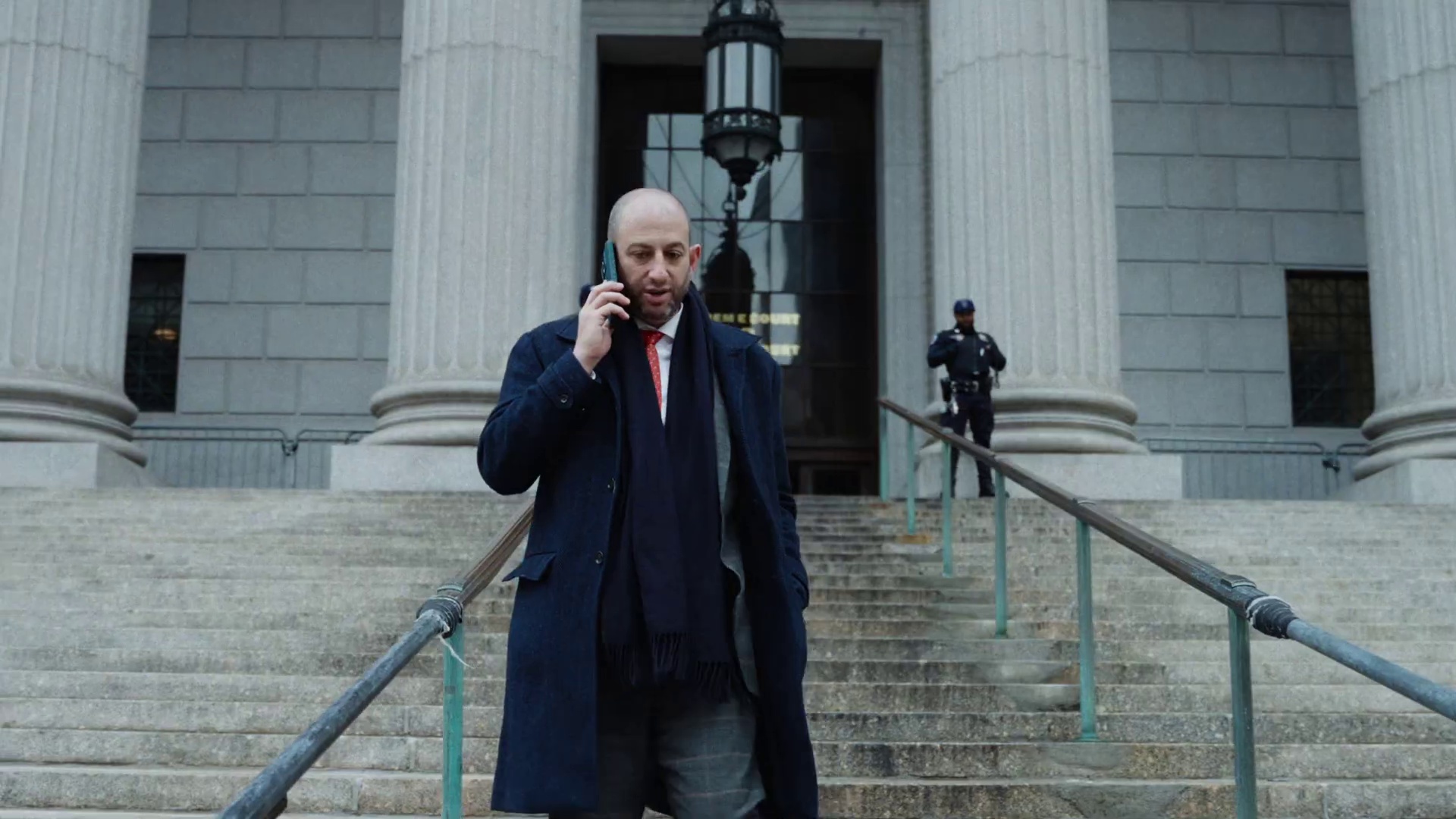
Todd Spodek
Lead Attorney & Founder
Featured on Netflix's "Inventing Anna," Todd Spodek brings decades of high-stakes criminal defense experience. His aggressive approach has secured dismissals and acquittals in cases others deemed unwinnable.
The defense of a perjury charge requires a granular examination of the specific words used. Not the general substance of the testimony. The specific words. The question must be parsed for ambiguity. The answer must be parsed for literal accuracy. The context must be evaluated for whether a reasonable person in the position of the witness could have interpreted the question differently than the questioner intended. The materiality of the statement must be tested against the actual scope of the proceeding, not the scope the government now claims it had. The defendant’s knowledge must be examined with reference to what the defendant actually believed at the time of the statement, not what the defendant learned afterward.
Each of these inquiries demands preparation that precedes the indictment where possible and intensifies after it.
The Spodek Law Group has represented clients in federal perjury matters across the Southern and Eastern Districts of New York and in federal courts throughout the country. The firm understands that a perjury charge is a charge about language, and that the defense of such a charge must begin with the same precision the government brings to its prosecution. Contact us for a consultation.