Federal Aggravated Identity Theft Defense
The two years are not negotiable, and that is the point.
Section 1028A of Title 18 imposes a mandatory consecutive sentence of twenty-four months on any defendant convicted of using another person’s means of identification during and in relation to one of approximately sixty enumerated federal felonies. The sentence cannot be reduced. It cannot run concurrent. It is immune to acceptance of responsibility adjustments, immune to cooperation credits, immune to the discretion of the sentencing judge. Congress designed it as a floor with no trapdoor.
Where the predicate offense involves terrorism, the mandatory term rises to five years. Where multiple counts are charged, each carries its own two-year addition, though Section 1028A(b)(4) permits the court to run those counts concurrent with one another. Prosecutors who charge five victims produce ten years of exposure above the underlying sentence. That arithmetic is not incidental to the statute’s design. It is the design.
In fiscal year 2024, the Sentencing Commission recorded 575 cases involving Section 1028A. The average sentence was fifty-four months. Ninety-nine percent received prison time. The one percent who did not are statistical noise.
The Statute Exists to Coerce Pleas
This is the function that the text does not disclose. A defendant facing wire fraud and four counts of aggravated identity theft confronts a sentencing exposure that makes trial irrational. Eight additional years, mandatory, consecutive, stacked atop whatever the Guidelines produce for the underlying scheme. The government offers to dismiss the 1028A counts in exchange for a plea to the predicate. The defendant accepts. The exchange is repeated in federal courthouses across the country with the regularity of a liturgy.
Before June 2023, the government’s position on what constituted “use” of another person’s identification was expansive to the point of absurdity. A healthcare provider who overbilled Medicaid and included a patient’s name on the claim form had, in the government’s view, committed aggravated identity theft. The patient’s name was on the form because the patient received services. The overbilling was the crime. The identity was incidental. The government charged it anyway.
The Supreme Court disagreed.
Dubin Redrew the Boundary
In Dubin v. United States, 599 U.S. 110 (2023), the Court held unanimously that Section 1028A requires the misuse of another person’s means of identification to be “at the crux” of what makes the underlying conduct criminal. Justice Sotomayor, writing for the majority, rejected the government’s position that any use of another person’s identification in a manner that aids a predicate felony satisfies the statute. That reading, the Court observed, bore “little resemblance to any ordinary meaning of identity theft.”
David Dubin managed a psychological testing company in San Antonio. His firm performed testing on Medicaid patients and billed the government at a higher reimbursement rate than the services warranted. He was convicted of healthcare fraud. He was also convicted of aggravated identity theft because the fraudulent claims included a patient’s Medicaid identification number. The Fifth Circuit affirmed. The Supreme Court vacated.
The reasoning was structural. The patient’s identity was not the instrument of the fraud. It was a data field on a form. The fraud consisted of billing at the wrong rate, a crime that would have been identical regardless of which patient’s number appeared on the claim. To hold otherwise would mean that every act of healthcare fraud, every inflated invoice bearing a client’s name, every false tax return prepared on behalf of an actual person, constitutes aggravated identity theft. The statute would swallow its predicate offenses.
Justice Gorsuch concurred separately to argue that the statute was not merely ambiguous but unconstitutionally vague, failing to provide “rudimentary notice” of what it criminalizes. That concurrence has not yet produced a majority. It may not need to. The holding itself removed a category of conduct from the statute’s reach that prosecutors had treated as settled law for nearly two decades.
The Knowledge Requirement Arrived Earlier
Fourteen years before Dubin, the Court addressed a different deficiency in the government’s application of the statute. In Flores-Figueroa v. United States, 556 U.S. 646 (2009), the question was whether the word “knowingly” in Section 1028A modified only the verbs (transfers, possesses, uses) or also the object (a means of identification of another person). The distinction mattered to Ignacio Flores-Figueroa, an immigrant who had purchased false identification documents to secure employment. The documents, without his knowledge, contained numbers that belonged to real individuals.
Justice Breyer, writing for a unanimous Court, held that the government must prove the defendant knew the identification belonged to an actual person. The grammar demanded it. Common sense confirmed it.
A defendant who fabricates a Social Security number from whole cloth and, by coincidence, produces a number assigned to a living person has not committed aggravated identity theft. The government must establish that the defendant was aware the means of identification belonged to someone real. In immigration cases, in document fraud cases, in any prosecution where the defendant’s connection to the victim’s actual identity is attenuated, Flores-Figueroa remains the most productive defense available.
What Dubin Has Produced in the Circuits
The “crux” test is now two years old. Its application has not been uniform.
In March 2025, the Second Circuit decided United States v. Omotayo, a wire fraud conspiracy involving an international scheme to defraud American businesses. The defendant had possessed and transmitted a counterfeit invoice bearing the real name of another person. The jury convicted on the aggravated identity theft count under an instruction that predated Dubin. The Second Circuit reversed. The identity on the invoice was not at the crux of the wire fraud; it was a detail on a document within a broader scheme. The instruction was “plainly incorrect,” and even under a correct instruction, the evidence was insufficient.
Omotayo confirms what the defense bar suspected: Dubin is not merely a doctrinal refinement. It is a mechanism for vacating convictions obtained under the government’s prior, expansive theory. Defendants sentenced before June 2023 under facts that would not satisfy the crux test have grounds for collateral relief under Section 2255. The question is not whether such motions will be filed. They are being filed now.
The Fourth Circuit has reached similar conclusions, holding that identity use must be the crux of the charged predicate offense, not merely part of a broader scheme. The boundaries of the test remain contested at the margins. Where the identity is used to open a fraudulent bank account, the crux requirement is satisfied. Where the identity appears on a form that accompanies an otherwise independent fraud, it is not. Between those poles sits a substantial volume of federal prosecution.
Need Help With Your Case?
Don't face criminal charges alone. Our experienced defense attorneys are ready to fight for your rights and freedom.
- 100% Confidential
- Response Within 1 Hour
- No Obligation Consultation
Or call us directly:
(212) 300-5196The Predicate Offense Determines Everything
Section 1028A does not function independently. It attaches to one of the enumerated felonies listed in subsection (c): theft of public funds under Section 641, bank fraud under Chapter 63, wire fraud, mail fraud, immigration offenses under the INA, Social Security fraud, healthcare fraud, passport fraud, computer fraud, false statements in firearms acquisitions. The list contains approximately sixty offenses spanning nine chapters of Title 18 and several provisions of the Social Security Act and Immigration and Nationality Act.
If the underlying felony is not enumerated, Section 1028A does not apply. If the underlying felony is not proven, Section 1028A collapses. The predicate offense is the load-bearing wall. Remove it and the enhancement falls.
This dependency creates a defense architecture that works in two directions simultaneously. The predicate must be attacked on its own terms: intent, materiality, sufficiency of the evidence, jurisdictional defects. The identity theft element must be attacked under the Dubin framework and the Flores-Figueroa knowledge requirement. A successful challenge to either is sufficient. The government must sustain both.
Count Stacking and the Arithmetic of Exposure
The mandatory minimum is two years per count. Section 1028A(b)(4) grants the sentencing court discretion to run multiple 1028A counts concurrent with each other, but not concurrent with the underlying sentence. The practical effect is that a defendant convicted on a single count faces twenty-four months added to the predicate sentence. A defendant convicted on four counts faces anywhere from twenty-four to ninety-six months, depending on the court’s exercise of discretion.
Prosecutors understand this arithmetic with precision. In a case involving ten victims, the government charges ten counts of aggravated identity theft. Twenty years of mandatory consecutive time. The plea offer dismisses nine. The defendant accepts the remaining one and its two-year addition as though it were a concession.
One must understand the mechanism to see it for what it is. The government does not charge ten counts because ten counts are warranted. The government charges ten counts because nine dismissals is a currency, and that currency purchases guilty pleas to the predicate.
Where the Defense Begins
Before a 1028A charge appears in an indictment, there is a period during which its inclusion is not yet determined. The investigation is underway. The target letter has been sent or is imminent. The AUSA is assembling the case and deciding which charges to bring. This period is where the most consequential advocacy occurs.
We have presented arguments to federal prosecutors during the pre-indictment phase that resulted in the exclusion of 1028A charges from the indictment entirely. The argument is straightforward under current law: does the identity use satisfy the crux test? If the government’s own evidence demonstrates that the fraud would have proceeded identically without the victim’s specific identity, the charge does not survive Dubin. A prosecutor who includes it anyway invites a motion to dismiss, a contested jury instruction, and the possibility of reversal on appeal. Some prosecutors accept that invitation. Others withdraw the charge.
At trial, the defense targets the knowledge element and the crux requirement through cross-examination of case agents and forensic accountants, through jury instructions that correctly state the post-Dubin standard, and through closing arguments that isolate the identity use from the underlying scheme. The government wants the jury to see a single narrative of fraud. The defense insists on granularity. Each element. Each count. Each victim’s identity examined for whether it was the crux of the criminal conduct or a name on a form.
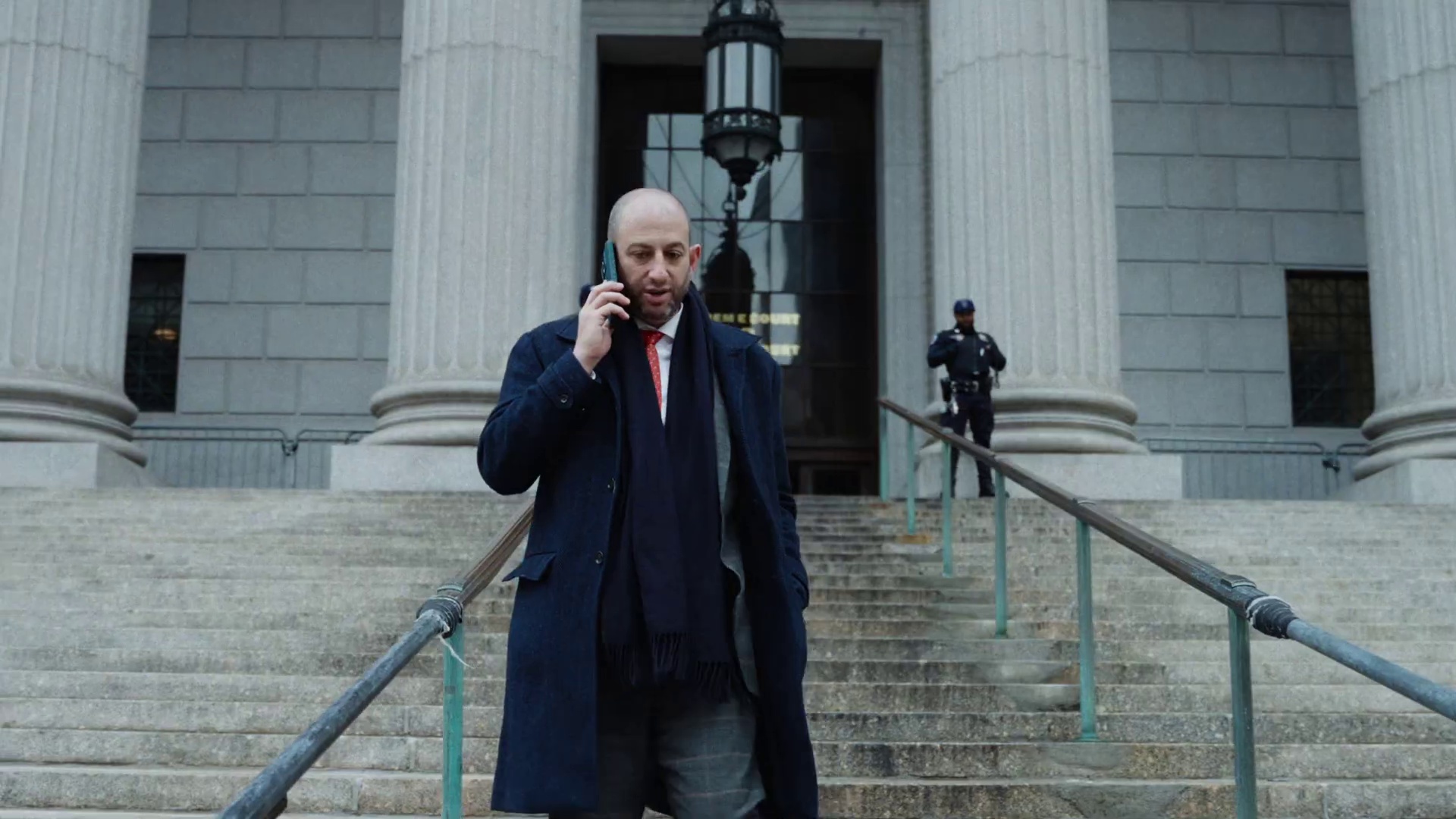
Todd Spodek
Lead Attorney & Founder
Featured on Netflix's "Inventing Anna," Todd Spodek brings decades of high-stakes criminal defense experience. His aggressive approach has secured dismissals and acquittals in cases others deemed unwinnable.
At sentencing, where a conviction has been obtained on the predicate but the 1028A count is vulnerable, the defense moves for acquittal under Rule 29, preserving the issue for appeal. The mandatory nature of the sentence means there is no mitigating argument to make at sentencing itself. The conviction is the sentence. All the work must be done before the verdict.
The Consecutive Sentence Problem Has No Judicial Solution
Federal judges have expressed discomfort with the rigidity of Section 1028A. The two-year floor cannot be adjusted downward. It cannot be suspended. It cannot be modified by the Sentencing Guidelines. A defendant who receives a twelve-month sentence on the predicate offense and a twenty-four-month consecutive sentence on the identity theft count serves a total of thirty-six months, of which two-thirds derives from the enhancement. The tail exceeds the animal.
Congress has been presented with proposals to reform the mandatory minimum, to grant judicial discretion, to permit concurrent sentencing with the predicate. None has advanced beyond committee. The Congressional Research Service has published analyses of the statute’s sentencing impact. The Sentencing Commission has issued reports documenting the disparity between 1028A sentences and the sentences imposed for the underlying conduct. The mandatory minimum persists.
The defense, then, is not mitigation. It is prevention. The charge must be defeated or dismissed before sentencing, because sentencing offers no relief.
The Consultation Is the First Act of Defense
A person under investigation for or charged with aggravated identity theft faces a mandatory addition to a sentence that is itself often severe. The predicate offenses enumerated in Section 1028A(c) carry their own substantial penalties: wire fraud, twenty years; bank fraud, thirty years; healthcare fraud, ten. The 1028A enhancement sits atop those exposures like a second structure on the same foundation.
We have represented clients in aggravated identity theft cases in the Southern and Eastern Districts of New York and in federal courts across the country. The defense begins with an assessment of the predicate: is it provable, and if so, is the identity use at its crux? That question, posed early and answered with precision, determines whether the twenty-four months are a certainty or a contingency.
The statute was written to be rigid. The case law has introduced fractures. Dubin and Flores-Figueroa are not minor adjustments. They are structural limitations on a charge that the government had treated as automatic for nearly two decades. The distance between a conviction that carries an additional two years and a dismissal of that count is measured in the quality of the analysis performed before the first court appearance.
That analysis begins with a phone call to this office.