





The federal government does not need much to prosecute extortion. Under 18 U.S.C. Section 1951, the Hobbs Act criminalizes any act of obtaining property from another person through force, threats, fear, or the exercise of official authority, provided that the conduct touches interstate commerce in even the most minimal degree. What makes this statute so dangerous for defendants is its architecture. The commerce requirement functions as an afterthought. The definition of extortion stretches to absorb conduct that, in state court, might constitute something far less severe. And the statutory ceiling sits at twenty years of incarceration per count.
Congress enacted the Hobbs Act in 1946 to replace the Federal Anti-Racketeering Act of 1934, and the original target was corruption within organized labor. That origin has become irrelevant. Federal prosecutors now deploy the statute against public officials, private citizens, business operators, and anyone whose alleged conduct can be characterized as obtaining property through wrongful means. The scope of the Act has expanded in a manner that its drafters did not anticipate and that its text does not constrain.
The Statutory Framework
Section 1951 defines extortion as the obtaining of property from another, with that person’s consent, induced by the wrongful use of actual or threatened force, violence, or fear, or under color of official right. Two distinct theories of prosecution emerge from this language. The first concerns private actors who allegedly obtain property through threats or intimidation. The second concerns public officials who allegedly receive payments in connection with their official duties.
For each theory, the government must establish that the conduct affected interstate or foreign commerce. Courts have interpreted this requirement with such permissiveness that it barely functions as a limitation at all. A restaurant that purchases supplies across state lines satisfies the element. A business that uses the internet satisfies the element. The threshold exists in the text, but its operation in practice is nominal.
The penalties reflect the statute’s severity. Conviction carries a maximum sentence of twenty years of imprisonment per count, and sentences on multiple counts may run consecutively. When the alleged extortion involved a firearm, sentencing enhancements under 18 U.S.C. Section 924(c) attach mandatory minimums that compound the exposure. A defendant facing three counts of Hobbs Act extortion with a firearms enhancement confronts decades of potential incarceration.
Extortion Under Color of Official Right
The prosecution of public officials under the Hobbs Act has generated the statute’s most consequential jurisprudence. In Evans v. United States (1992), the Supreme Court held that a public official need not affirmatively demand payment for a conviction to stand. Passive acceptance of a benefit, where the official understands that the payment is being made in exchange for the exercise of official power, constitutes extortion under color of official right. The Court eliminated the requirement of inducement that many lower courts had recognized, and in doing so, it collapsed the practical distinction between extortion and bribery in the public corruption context.
That collapse produces real consequences for defendants. A public official who receives something of value from a person with business before the official’s office faces prosecution even absent any solicitation, any explicit agreement, any stated quid pro quo. The government’s burden reduces to demonstrating that the official received a payment not owed to the official, and that the official knew the payment was connected to official action. The inference can be drawn from circumstance. The formal exchange need not exist.
In January 2025, Ruth Nivar, a former employee of the D.C. Department of Human Services, pleaded guilty to Hobbs Act extortion under color of official right. She had collected payments from low-income individuals in exchange for processing public assistance applications that her position required her to process without charge. The case illustrates the statute’s reach. The amounts were small. The victims were among the most vulnerable populations in the District. The federal machinery engaged regardless.
The Supreme Court’s Shifting Boundaries
Three Supreme Court decisions from the past three decades define the contours of Hobbs Act prosecution in ways that defense counsel must understand with precision.
Scheidler v. National Organization for Women (2003) established that the Hobbs Act requires the actual obtaining of property. Anti-abortion protesters who used intimidation to disrupt clinic operations had not committed extortion because they had not obtained transferable property from the clinics. The word “obtaining” does genuine work in the statute. Violence alone, disruption alone, interference alone does not satisfy the element. Something must be taken.
Ocasio v. United States (2016) expanded conspiracy liability under the Act. The Court held that a defendant may conspire to commit Hobbs Act extortion even when the property at issue moves between co-conspirators rather than from an outside victim. Baltimore police officers who participated in a referral kickback scheme with an auto repair shop were properly convicted of conspiracy, despite the fact that the property flowed from one conspirator to another. The decision widened the net for multi-party schemes and introduced significant complications for defendants in joint ventures or reciprocal arrangements.
The 2024 decision in Snyder v. United States did not address the Hobbs Act by name, but its implications for public corruption prosecutions are direct. The Court held, in a six-to-three decision, that 18 U.S.C. Section 666 criminalizes bribes but not gratuities. James Snyder, the former mayor of Portage, Indiana, received $13,000 from a company after the city awarded it contracts worth over a million dollars. The Court drew a firm line between payments made before official action to influence it and payments made after official action as a token of appreciation. Where Section 666 no longer reaches gratuities, prosecutors will increase their reliance on the Hobbs Act’s color-of-official-right provision, which does not require the same temporal sequence. The pressure on defendants in public office will intensify rather than diminish.
Defense Strategies That Function
The structure of Hobbs Act prosecution creates specific vulnerabilities that competent defense counsel can exploit.
Need Help With Your Case?
Don't face criminal charges alone. Our experienced defense attorneys are ready to fight for your rights and freedom.
- 100% Confidential
- Response Within 1 Hour
- No Obligation Consultation
Or call us directly:
(212) 300-5196The interstate commerce element, though courts have interpreted it with remarkable generosity, remains a constitutional requirement. Where the alleged victim’s activities are purely local, where the business in question operates within a single state without connection to interstate supply chains or communications, the jurisdictional basis weakens. This argument succeeds with greater frequency in cases involving individual victims rather than business entities, because the commercial connections of a private person are often more attenuated than those of any operating enterprise.
The property requirement, reinforced by Scheidler, provides another line of defense. The government must identify something that was obtained. Where the alleged conduct amounts to intimidation, harassment, or interference without the transfer of identifiable property, the statute does not apply. Courts have grown more attentive to this distinction following the Supreme Court’s rejection of intangible property theories in Ciminelli v. United States (2023), which held that federal fraud statutes reach only traditional property interests. Indictments that rely on concepts such as the right to control assets, deprivation of economic information, or interference with business relationships are vulnerable to pretrial dismissal motions. Between 2023 and late 2025, approximately forty-seven federal cases saw charges narrowed or dismissed where the alleged property was intangible.
Intent operates as a defense of particular force. A defendant who held a genuine, good-faith belief in an entitlement to the property at issue did not possess the mental state required for extortion. The threatening of lawful action, such as filing a lawsuit, reporting regulatory violations, or pursuing a criminal complaint, does not constitute the wrongful use of fear within the meaning of the statute. The distinction between hard negotiation and criminal extortion is not always obvious, and in the space between those two characterizations, acquittals occur.
Entrapment remains available where the government initiated the scheme. Federal investigations into public corruption often involve undercover agents or cooperating witnesses who present opportunities that the target would not have pursued independently. Where the evidence demonstrates that the government supplied the plan, the means, and the motivation, the defense has traction that can dismantle the prosecution’s theory at trial.
The Sentencing Calculus
Conviction under Section 1951 subjects the defendant to the United States Sentencing Guidelines, which calculate the offense level based on the amount of loss, the degree of threat involved, the vulnerability of victims, and the defendant’s role in the offense. A base offense level of twenty under USSG Section 2B3.2 applies to extortion, with enhancements that can elevate the guidelines range into territory that effectively mandates years of imprisonment.
The amount of property obtained or demanded drives the most significant enhancement. Amounts exceeding $250,000 add multiple offense levels. The involvement of a firearm, even if not discharged, triggers further enhancement. A defendant who occupied a leadership role in a multi-person scheme faces an additional increase. When these factors compound, a defendant with no prior criminal history can face a guidelines range that exceeds ten years.
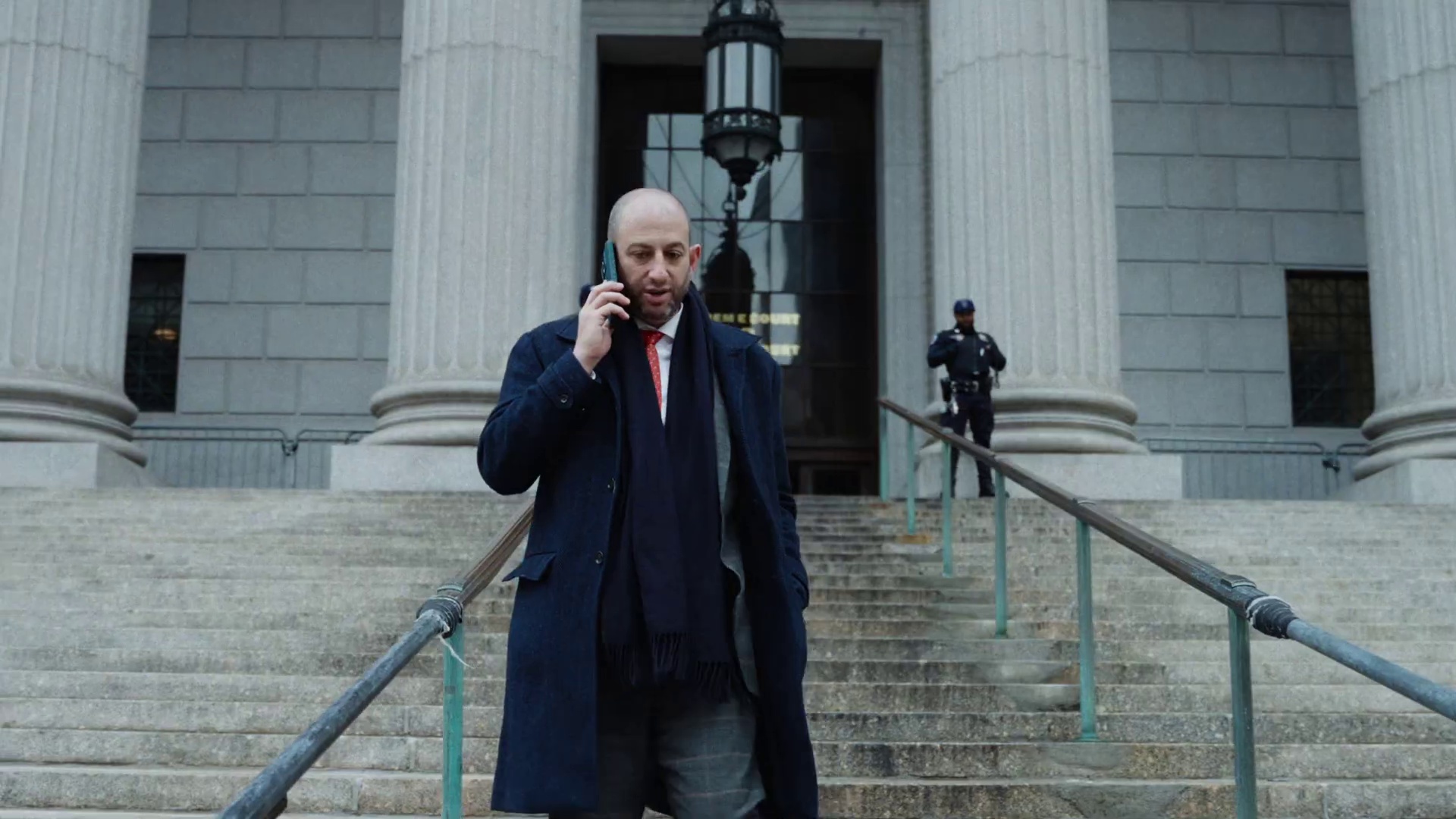
Todd Spodek
Lead Attorney & Founder
Featured on Netflix's "Inventing Anna," Todd Spodek brings decades of high-stakes criminal defense experience. His aggressive approach has secured dismissals and acquittals in cases others deemed unwinnable.
Judges retain discretion under United States v. Booker to sentence below the guidelines range, and the variance rate in white-collar and public corruption cases has increased in recent years. But discretion is not predictability. The exposure remains the statutory maximum of twenty years per count, and federal prosecutors regularly seek sentences at or above the guidelines range in cases that involve public trust, vulnerable victims, or substantial financial harm.
What a Federal Investigation Looks Like Before Charges
Hobbs Act investigations often begin without the target’s knowledge. Grand jury subpoenas issue to associates, financial institutions, and business partners. Cooperating witnesses may record conversations. Undercover agents may initiate contact. The investigation can proceed for months or years before the target receives any indication that federal attention has focused on their conduct.
A federal agent calls you and says they "just want to ask a few questions" about a business transaction.
Is it safe to talk to them informally?
There is no such thing as an informal conversation with a federal agent. Under 18 U.S.C. 1001, making any false statement to a federal agent is a felony, even without being under oath. Always consult an attorney before speaking with investigators.
This is general information only. Contact us for advice specific to your situation.
The arrival of a target letter, the execution of a search warrant at a home or office, or contact from federal agents requesting an interview signals that the investigation has reached a critical stage. What the target does in that period determines outcomes. Speaking to agents without counsel present, attempting to contact witnesses, or destroying records transforms a defensible case into one that carries additional obstruction charges.
Representation must begin before the indictment. The period between investigation and charging is where defense counsel can engage with prosecutors through proffer sessions, challenge the sufficiency of the evidence, and advocate against prosecution. Once the indictment issues, the terrain changes. Pretrial detention becomes possible. The pressure to cooperate intensifies. The government’s willingness to negotiate from a position of strength increases.
The Firm’s Position
Federal Lawyers has defended clients against federal extortion charges in matters involving public corruption allegations, commercial disputes characterized as threats, and multi-defendant conspiracy cases. The firm’s attorneys have experience with the specific procedural and evidentiary challenges that Hobbs Act prosecutions present, from challenging the commerce element at the motion stage to contesting intent at trial.
A federal extortion charge under the Hobbs Act is not a charge that permits delay. The statute’s breadth, the government’s resources, and the severity of the penalties demand immediate and informed representation. Contact Federal Lawyers for a consultation.