Federal Bank Fraud Defense
The Charge Precedes the Proof
A federal bank fraud indictment under 18 U.S.C. Section 1344 carries a statutory maximum of 30 years in prison and a $1,000,000 fine per count. That sentence is not theoretical. In 2024 and 2025, defendants received sentences approximately 40 percent longer than those imposed for identical conduct two years prior. The statute itself is 52 words long. The prosecutorial apparatus behind it is immense.
What the government must prove is deceptively simple: that the accused knowingly executed, or attempted to execute, a scheme or artifice to defraud a financial institution, or to obtain property under its custody through false pretenses, representations, or promises. The financial institution must be federally insured. The false statement must be material. The defendant must have acted with knowledge.
And yet the word “knowingly” has consumed more appellate oxygen than any other term in white-collar criminal law.
Two Subsections, Two Doctrines
Section 1344 contains two operative clauses, and the distinction between them is not ornamental. Subsection (1) criminalizes schemes to defraud a financial institution. Subsection (2) criminalizes schemes to obtain bank property by means of false or fraudulent pretenses. The Supreme Court clarified in Loughrin v. United States, 573 U.S. 351 (2014), that subsection (2) does not require the government to prove an intent to defraud the bank itself. It is enough that the defendant used false pretenses as the mechanism by which bank-held funds changed hands.
Subsection (1) is narrower and older in its doctrinal demands. The government must show that the defendant intended to deceive the financial institution. But in Shaw v. United States, 580 U.S. ___ (2016), the Court held unanimously that a scheme targeting a bank customer’s deposit account still constitutes a scheme to defraud the bank, because the bank holds a property interest in those deposits. Shaw had transferred funds from a customer’s account using fraudulent means. He argued the bank was incidental. The Court disagreed. The bank possessed the account. The false statements were directed at the bank. The bank released the funds. That sequence was sufficient.
The government does not need to prove that the bank suffered a financial loss. It does not need to prove that the defendant intended the bank to suffer one.
Materiality Is the Contested Ground
Since Neder v. United States, 527 U.S. 1 (1999), materiality has been an element of federal bank fraud. A false statement is material if it has a natural tendency to influence, or is capable of influencing, the decision of the person to whom it is addressed. This is an objective standard. The question is not whether the bank was actually deceived, but whether a reasonable institution could have been.
In May 2025, the Supreme Court decided Kousisis v. United States and eliminated the requirement that a fraud victim suffer a net economic loss. Kousisis involved a painting contractor who falsely represented that a disadvantaged subcontractor would supply materials for a government contract. The work itself was satisfactory. No agency lost money. The Court held, unanimously, that the deception was enough. The misrepresentations were material because they would have influenced the victim’s decision to enter the transaction.
That holding, though rendered in a wire fraud case under 18 U.S.C. Section 1343, applies with equal force to bank fraud prosecutions. Materiality is now the fulcrum. Not loss. Not harm. The capacity to deceive.
The government’s burden is to show that the defendant’s misrepresentation would have mattered to a reasonable bank officer. Whether it did matter, whether the bank lost a dollar, is irrelevant to the elements of the offense.
What Intent Means in a Federal Courtroom
Good faith is the most common defense to a charge under Section 1344, and it is the most misunderstood. The statute requires that the defendant act “knowingly.” An intent to deceive and cheat must exist. But the government is not required to prove that the defendant knew the conduct was illegal. The knowledge element concerns awareness of the conduct itself, not awareness of its criminality.
Consider the loan applicant who overstates income on a mortgage application. If the applicant believed the stated figure was accurate, there is no knowing falsehood. If the applicant knew the figure was false but believed the bank would not care, the element of knowledge is satisfied. The distinction between those two positions is the entire trial.
I should be more precise. The distinction is the entire trial when the evidence is ambiguous. When an underwriter’s file contains a fabricated W-2, the question of intent tends to resolve itself. The cases that reach verdict are the ones where the defendant’s state of mind is genuinely contested, where documents tell two stories, where a broker or intermediary introduced the falsehood and the defendant’s participation in the scheme is circumstantial.
Need Help With Your Case?
Don't face criminal charges alone. Our experienced defense attorneys are ready to fight for your rights and freedom.
- 100% Confidential
- Response Within 1 Hour
- No Obligation Consultation
Or call us directly:
(212) 300-5196The Loss Table Governs the Sentence
The statutory maximum of 30 years is a ceiling. The sentence that a federal judge actually imposes is driven by the United States Sentencing Guidelines, specifically USSG Section 2B1.1. Bank fraud begins at a base offense level of 7. From there, the loss amount determines the trajectory. A loss between $7,000 and $15,000 adds 2 levels. A loss exceeding $25,000,000 adds 24. Each level corresponds to months. Each month is real.
Beyond the loss table, enhancements accumulate. The use of sophisticated means adds 2 levels. An abuse of a position of trust adds 2. Ten or more victims adds 2 more. A scheme affecting a financial institution adds an additional 2 levels under certain conditions. The base level of 7 can become 30 or higher before the judge considers any departure.
In 2025, federal judges followed the guidelines range in approximately half of all fraud sentences. The other half departed, sometimes below, sometimes above. The direction of that departure depends on the quality of the sentencing memorandum, the credibility of the mitigation evidence, and the particular inclinations of the court. Judges in the Southern District of New York have a reputation for severity in financial cases. That reputation is earned.
The Statute of Limitations Extends Beyond Expectation
Most federal crimes carry a five-year statute of limitations. Bank fraud carries ten. Under 18 U.S.C. Section 3293, the government has a full decade to bring charges from the date of the offense. For defendants who believed the passage of time had insulated them, the knock still comes.
The extended window has particular significance for pandemic-era fraud. The COVID-19 EIDL Fraud Statute of Limitations Act of 2022 further extended the limitations period for Economic Injury Disaster Loan and Paycheck Protection Program fraud, keeping those cases within prosecutorial reach through 2030 and beyond. Federal judges in 2025 have imposed custodial sentences in nearly every PPP fraud case at sentencing, regardless of the amount at issue.
Where Defense Begins
The architecture of a federal bank fraud defense is structural before it is argumentative. It begins with the elements. Each one must be proved beyond a reasonable doubt, and each one can be contested.
The materiality challenge asks whether the alleged false statement was capable of influencing the bank’s decision. A misstatement on a loan application about the color of a property’s siding is not material. A misstatement about the borrower’s existing debt obligations is. The line between these is thick in the abstract and thin in practice, and it is the defense attorney’s obligation to demonstrate precisely where the government’s evidence falls.
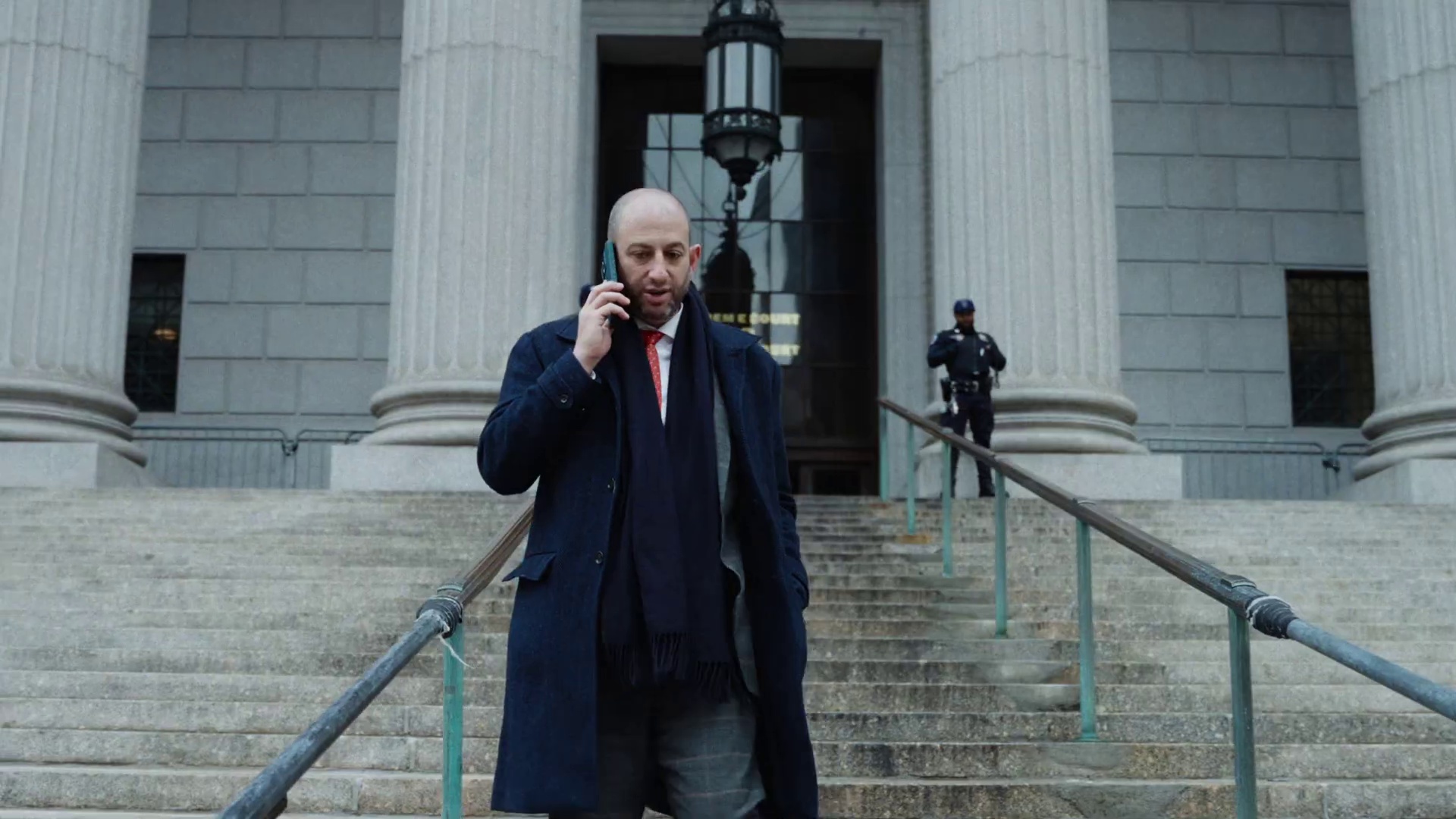
Todd Spodek
Lead Attorney & Founder
Featured on Netflix's "Inventing Anna," Todd Spodek brings decades of high-stakes criminal defense experience. His aggressive approach has secured dismissals and acquittals in cases others deemed unwinnable.
The intent defense asks whether the defendant possessed the requisite knowledge. Did the defendant know the statement was false at the time it was made? Did the defendant rely on a professional, an accountant or a broker, who prepared the documents? Was the defendant a signatory to forms completed by someone else? The presence of an intermediary does not immunize the defendant, but it complicates the government’s proof of knowing participation in the scheme.
Forensic accounting is the third axis. Federal bank fraud prosecutions rely on documentary evidence. The loss calculation that determines the sentencing range is itself a contested number. Intended loss and actual loss produce different figures. The Sentencing Commission has moved to clarify the distinction in its 2024 amendments, relocating the definitions from commentary to the guideline text itself. A defense that reduces the loss figure from $250,000 to $95,000 can mean the difference between a guidelines range of 37 months and one of 15.
There is also the question of timing. Early intervention, before an indictment issues, permits engagement with the United States Attorney’s Office during the investigation. A white paper submitted at the right moment, to the right prosecutor, presenting exculpatory evidence or a theory of innocence, can result in a declination. This does not happen often. But when it does, it happens because the defense was constructed before the charge was filed.
The Federal System Does Not Forgive Delay
A person under investigation for bank fraud may not know it for months. Federal grand jury proceedings are secret. Target letters, when they arrive, signal that the investigation is advanced. Waiting for an indictment to retain counsel is a decision with consequences that compound.
The 18 individuals indicted in the Southern District of Iowa in October 2025 on bank fraud and money laundering charges illustrate the scale at which these prosecutions operate. Conspiracy counts link defendants together. One cooperator’s testimony implicates the rest. The government builds its case over years, and the defense must be prepared to meet it with equal preparation and greater precision.
At Spodek Law Group, we have represented clients in federal fraud investigations from the pre-indictment stage through trial and sentencing. Our attorneys have reduced loss calculations, challenged the sufficiency of the government’s evidence on intent and materiality, and secured outcomes that the guidelines did not predict. The consultation is free. The time to act is before the government acts first. Call us at (888) 535-3686.