





Drug Crimes

DEA Defense Lawyers

Todd Spodek, Managing Partner

Prominently Featured In:

CNN
Netflix
Newsweek
Business Insider
Time

Since the early 1970’s, the federal government has been fighting an ongoing battle to eliminate the illegal sale, purchase and use of drugs designated illegal. This includes substances like heroin and other opioids, cocaine, methamphetamine and even marijuana in most states. The government agency responsible for this drug enforcement is the DEA, or Drug Enforcement Agency, and it is part of the federal government. Any drug charge that involves the DEA should be taken seriously. It is imperative to retain a good criminal defense attorney that has experience in these types of federal drug trafficking charges or other types of drug cases.

The stakes are much higher when individuals are charged with a federal drug crime. The mandatory sentencing regulations are much higher than a state or local drug charge in the majority of cases. However, New York City residents should also be aware that a main office of this federal drug agency is right in the city. It is common for local drug cases to be taken over by federal agents who were likely monitoring the drug activity that could have led to the arrest. In either scenario, the best action that the accused individual can take is to call a qualified criminal lawyer skilled in major drug crime representation.

Proper Search and Seizure

Much of the case against the accused drug trafficker is typically based on evidence that law enforcement officers obtained during a raid or at the time of arrest. Often, a known drug abuser could be monitored if federal agents are trying to bust higher up players. Law enforcement agents need the proper search warrant prior to searching someone’s private home, person or property. There are strict rules that the officers need to follow in the process of collecting incriminating evidence against the suspect. A trained criminal defense attorney will seek to find improper search and seizure activities by the police.

Proving this can get that evidence thrown out. The charges could be dropped, or in the more common case where the agents do have substantial amounts of evidence, the attorney will seek a lesser charge and/or lighter sentencing on behalf of their clients. City residents should be aware that these federal drug charges could be filed against them even if what the person is caught with is their personal stash of marijuana. If the amount is enough, the agents will enforce those stiffer charges especially if the suspect has a connection to major drug traffickers that they are targeting.

FREE CONSULTATION

Need Help With Your Case?

Don't face criminal charges alone. Our experienced defense attorneys are ready to fight for your rights and freedom.

  • 100% Confidential
  • Response Within 1 Hour
  • No Obligation Consultation

Or call us directly:

(212) 300-5196

Medical Professionals at Risk

With the nation concerned about the opiod crisis, medical doctors and other professionals are also at risk of severe drug charges that could end up with the convicted person losing his/her medical or health related license. DEA agents often investigate medical practices that potentially could be involved with illegal drugs getting onto the street. These drug enforcement agents will monitor how patients get their prescriptions for the drug, how they pay, whether the doctor actually sees the patient and so on. This is why it is essential that any doctor, pharmacist or other health professional being investigated for illegal or improper distribution of drugs to contact an attorney that is qualified to represent these sorts of criminal cases.

Experienced Defense Attorneys

Top criminal attorneys know that some individuals in law enforcement and other governing agencies will use tactics and methods not quite on the level to prove their cases. When searching for the right lawyer, hiring one that has actual experience in working for the prosecution side can be very helpful when charged with this type of criminal offense. Innocent people that are told that they are just having a chat with police should be wary.
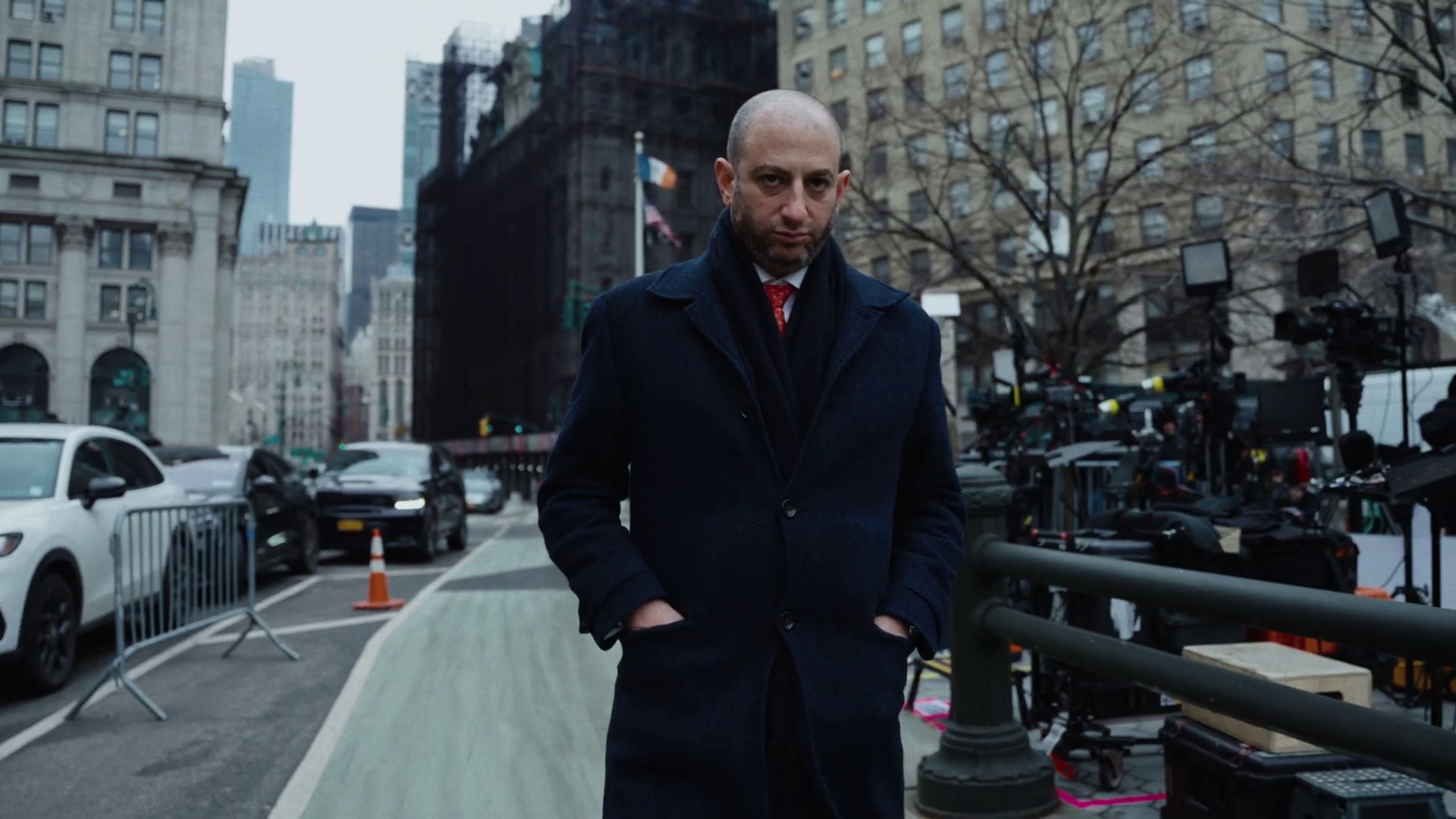
Todd Spodek
DEFENSE TEAM SPOTLIGHT

Todd Spodek

Lead Attorney & Founder

Featured on Netflix's "Inventing Anna," Todd Spodek brings decades of high-stakes criminal defense experience. His aggressive approach has secured dismissals and acquittals in cases others deemed unwinnable.

NY Bar Admitted Multi-State Licensed Federal Courts
Meet the Full Team

At the first sign that a person is under suspicion of anything related to drugs, they should ask for a criminal defense attorney. By law, at that point, the officers must allow the suspect to call an attorney and cease questioning the person. Retaining a criminal defense attorney knowledgeable regarding drug prosecution cases can mean the difference between jail time or having the case dropped or at least lowering the penalties. A drug charge can affect more than just the person charged. Entire families can find themselves facing prejudice. Visit https:www.nyccriminalattorneys.com for more information.
Share This Article:
Todd Spodek
ABOUT THE AUTHOR

Todd Spodek

Managing Partner

With decades of experience in high-stakes federal criminal defense, Todd Spodek has built a reputation for aggressive, strategic representation. Featured on Netflix's "Inventing Anna," he has successfully defended clients facing federal charges, white-collar allegations, and complex criminal cases in federal courts nationwide.

Bar Admissions: New York State Bar New Jersey State Bar U.S. District Court, SDNY U.S. District Court, EDNY
View Attorney Profile

Community Discussion

Real questions and discussions from readers about this topic.

85
RO restaurant_owner_robbed Business Owner 1w ago

DEA seized $127,000 from my restaurant’s safe — civil forfeiture, no charges filed

I own a Caribbean restaurant that does strong cash business. We've been open for seven years, employ 22 people, and I report every dollar to the IRS. My accountant has filed FinCEN CTRs whenever deposits exceeded $10,000. I keep cash in a commercial safe because I make bank deposits three times a week and sometimes the weekend cash sits until Monday.

Three weeks ago, DEA agents showed up with a search warrant. They said they received a tip that my restaurant was laundering money for a drug operation. They searched every inch of the building, found nothing illegal — no drugs, no paraphernalia, no evidence of any criminal activity. But they seized $127,000 in cash from my safe and $14,200 from the registers.

No one has been arrested. No charges have been filed. But they took $141,200 of legitimate business revenue and now I can't make payroll for my staff. I had to borrow $40,000 from my sister just to keep the doors open this month.

The DEA sent me a notice of civil forfeiture. They don't have to prove I committed a crime — I have to prove the money is clean? How is this legal? What do I do?

44
FF forfeiture_fighter_esq Verified Attorney 1w ago

Civil asset forfeiture is one of the most abused tools in federal law enforcement. Under 18 USC §981 and 21 USC §881, the government can seize property it believes is connected to drug activity and force YOU to prove it's legitimate — the burden of proof is on you, not them.

But you have rights and a strong case if your finances are clean. Here's what you need to do immediately:

1. File a verified claim within 35 days of the forfeiture notice. Miss this deadline and you lose the money permanently.
2. Gather every piece of financial documentation: tax returns, daily POS reports, bank statements, deposit records, payroll records, food supplier invoices, and your accountant's work papers.
3. Get a forensic accountant to trace every dollar in that safe back to legitimate restaurant revenue. Cash-heavy businesses can do this through daily sales reconciliation.

The government's case is usually built on structuring suspicions or a drug dog alert on the cash (which is meaningless — studies show 85-90% of US currency carries drug residue). If they have nothing beyond "it's a lot of cash" and an anonymous tip, you're in a strong position.

Many forfeiture attorneys work on contingency or reduced fees for cases with clear legitimate sources. The government settles a significant percentage of contested forfeitures because they'd rather return part of the money than lose in court and set bad precedent.

39
GM got_my_money_back Won Forfeiture Case 6d ago

Former restaurant owner here — this happened to my family's check-cashing and convenience store in 2021. DEA took $89,000 from our safe, claimed we were structuring deposits to avoid CTR reporting. We weren't — our deposits just naturally varied because our daily revenue varied.

Our attorney filed the claim immediately and requested all discovery from the government. Turned out their entire case was based on a single confidential informant who claimed he'd seen drug deals in our parking lot. The CI had four felony convictions and was working off a 15-year sentence. Our attorney deposed the case agent and he admitted they had zero evidence connecting the cash to any illegal transaction.

We got 100% of our money back after nine months, but we had to fight for every dollar. The government's first offer was to return 50% if we agreed not to sue. We refused. Their second offer was 80%. We refused. We won the full amount at a hearing.

Do NOT accept a settlement offer without talking to an attorney. They lowball because most people are too scared or too broke to fight. That's the whole business model of civil forfeiture.

78
PD pain_doc_under_siege Medical Professional 3w ago

DEA raided my pain management clinic — 14 agents, guns drawn, patients terrified

I've been running a legitimate pain management practice for eleven years. Last Tuesday at 7:15 AM, fourteen DEA agents in tactical gear forced their way into my clinic while patients were in the waiting room. They seized every computer, every patient file, every prescription pad. They even took the security camera DVR.

They're alleging I overprescribed oxycodone and fentanyl patches to 23 patients over a two-year period. I followed every single protocol — urine screens, pill counts, imaging requirements, pain agreements. My prescribing numbers aren't even in the top quartile for my specialty in this region.

My medical license is now under emergency review, my staff of nine can't work, and I have 340 chronic pain patients who suddenly lost their doctor. My malpractice insurer already sent a reservation-of-rights letter. I've spent $185,000 building this practice and I'm watching it die in real time.

Does anyone have experience with DEA investigations targeting physicians? How do I fight this without losing everything I've built?

42
FH fed_health_defense Verified Attorney 3w ago

I'm a criminal defense attorney who handles DEA cases involving medical professionals. First — do NOT speak to the DEA or any federal agent without counsel present. Do not try to "explain" your prescribing patterns to them. Every word you say becomes evidence.

DEA physician prosecutions under 21 USC §841 require the government to prove you prescribed outside the usual course of professional practice and without a legitimate medical purpose. The key defense is demonstrating that your clinical judgment was reasonable, even if other doctors might have prescribed differently. Your documentation is your lifeline here.

You need a lawyer who understands both federal drug law AND medical practice standards. We typically retain independent pain management experts to review the charts the DEA is questioning. In many of these cases, the government cherry-picks the highest-dose patients and ignores the clinical context.

Regarding your practice — file for an emergency hearing on your DEA registration. You may be able to negotiate a temporary voluntary surrender rather than a revocation, which preserves your ability to get it back. Time is critical on this.

38
CP cleared_pain_specialist Acquitted 2024 3w ago

I went through almost the exact same thing three years ago. Anesthesiologist running a pain clinic, DEA came in with a search warrant alleging I was running a pill mill. They focused on 19 of my patients.

What saved me: I had meticulous records. Every patient had documented MRIs or CT scans justifying the pain diagnosis, every visit note showed I assessed function and side effects, and I had discharge letters for the four patients I terminated for failed drug screens. My attorney brought in two independent pain specialists who reviewed every chart and testified that my prescribing was within the standard of care.

The case took 22 months to resolve. The government dropped 16 of the 19 patient counts before trial and the jury acquitted on the remaining three. Total legal cost was around $410,000 and I lost about 60% of my patients during the process, but I kept my license and my DEA registration.

Get the best federal defense attorney you can afford. This is not the time to cut costs.

76
DT doing_time_seeking_hope 2w ago

Convicted on federal drug charges 8 years ago — can I get my sentence reduced now?

I was convicted in 2018 of conspiracy to distribute crack cocaine and sentenced to 15 years in federal prison. I've served almost 8 years. I've been a model inmate — completed my GED, got two vocational certifications, mentored younger inmates, zero disciplinary incidents.

Since my sentencing, there have been changes to federal drug sentencing law. The First Step Act passed. The crack-to-powder disparity was addressed. The Sentencing Commission made retroactive changes to the guidelines. My cellie says I might be eligible for a sentence reduction but I can't get a straight answer from anyone inside.

Here's my situation: I was 23 when I was arrested. I had a minor juvenile record but no adult convictions. The conspiracy involved approximately 280 grams of crack. Under the old guidelines, that triggered a 10-year mandatory minimum, and the judge went above that to 15 years based on enhancements. My trial attorney was terrible — he told me to reject a 7-year plea offer because he was "going to win at trial." He didn't.

I have two daughters, now 13 and 10, who I've only seen through plexiglass. My mother is raising them on her Social Security check. If there's any legal avenue to get even one year cut off my sentence, I need to know about it. I'll do whatever paperwork is required.

42
HN home_now_2022 Sentence Reduced 1w ago

I got my sentence reduced under the First Step Act in 2022. Went from 12 years down to 8, and then got an additional year off through earned time credits. I'm home now.

Here's what I did from inside:

1. Filed a request with my unit team for a First Step Act review. They dragged their feet for months. Follow up in writing every 30 days and keep copies.

2. When BOP didn't respond after 30 days, I filed a compassionate release motion directly with the court pro se (meaning I wrote it myself without a lawyer). I used the template from a prisoner rights organization and customized it with my specific circumstances.

3. The judge appointed counsel to help with the motion. The appointed attorney refiled with better legal arguments and attached my institutional record, programming certificates, letters from my family, and a reentry plan showing I had housing and a job commitment.

4. The judge held a hearing, recalculated my guidelines under the current law, considered my rehabilitation, and reduced my sentence by 4 years. I went home 7 months later.

Key tip: start the process NOW. Don't wait for someone to do it for you. Write to the clerk of the court in the district where you were sentenced and ask for the forms to file a pro se motion. Write to every sentencing reform organization you can find. And document everything you've accomplished inside — every certificate, every class, every positive program report.

Your story matters. Your rehabilitation matters. Don't let anyone tell you otherwise. The law has changed and you deserve to benefit from it.

39
PC post_conviction_atty Verified Attorney 1w ago

You likely have multiple avenues for relief. Let me break them down:

**1. First Step Act §404**: This made the Fair Sentencing Act of 2010 retroactive. If your crack offense was sentenced under the old 100:1 crack-to-powder ratio, you may be eligible for resentencing under the current 18:1 ratio. At 280 grams of crack, this could significantly change your mandatory minimum and guideline range.

**2. Compassionate release (18 USC §3582(c)(1)(A))**: The First Step Act allows inmates to file their own compassionate release motions after exhausting BOP administrative remedies (or after 30 days with no response). Courts have granted release based on combinations of factors: lengthy sentence, guideline changes, rehabilitation record, family circumstances, and the disparity between your sentence and what you'd receive today.

**3. Good time credits**: The First Step Act changed the good time calculation from 47 to 54 days per year. If your institution hasn't recalculated your release date, they should.

**4. Earned time credits**: Your GED, vocational certifications, and mentoring likely qualify for earned time credits under the First Step Act's EBRR system. Have you been assessed for these?

**5. Ineffective assistance of counsel**: Your attorney advised you to reject a 7-year plea and then lost at trial, resulting in 15 years. Depending on when you filed (or didn't file) a §2255 motion, you may still have grounds for an IAC claim, though the timing is critical.

Contact the Federal Defenders office in your district. Many have dedicated units handling retroactive sentencing cases. You can also write to sentencing advocacy organizations. Your rehabilitation record and family situation make you a strong candidate.

73
AD adderall_dads_nightmare 2w ago

My 19-year-old son sold Adderall to classmates — now it’s a federal DEA case somehow

My son is a college freshman. He has a legitimate prescription for Adderall for ADHD he's had since age 12. During finals week, he sold some of his pills to three classmates — maybe 20-30 pills total at $5 each. Stupid? Absolutely. But he's 19 and it was finals and everyone on his floor was doing it.

Somehow this ended up as a federal case. A DEA agent showed up at our house with an arrest warrant. They're charging him with distribution of a Schedule II controlled substance. Federal charges. For selling his own prescription Adderall to study partners.

His roommate apparently got caught with a larger quantity of various pills and named my son as his "source" to get a better deal. The DEA agent told my son they're "making an example" because of the campus drug problem. My son has never been in trouble. He's an Eagle Scout. He volunteers at the food bank every Saturday.

The public defender mentioned "mandatory minimums" and I nearly passed out. My wife hasn't stopped crying in three days. We're normal people. This can't be happening over study drugs. Someone please tell me there's a way out of this.

43
CD campus_drug_defense Verified Attorney 1w ago

Take a breath. This is scary but it's more manageable than you think.

First, the good news: 20-30 Adderall pills is a very small quantity. Schedule II distribution doesn't carry a mandatory minimum unless the quantity triggers one, and the thresholds for amphetamine are measured in grams of actual substance, not pill count. At 20-30 pills of typical Adderall doses, you're almost certainly below any mandatory minimum trigger.

Second, your son is a textbook candidate for federal pretrial diversion under 18 USC §3154. First-time offenders under 21, charged with non-violent offenses, with strong community ties are exactly who the program was designed for. Completion of diversion means the charges are dismissed and the record can be expunged. Not every district offers it and the AUSA has discretion, but this is the first thing a good attorney should pursue.

Third, even if diversion isn't available, the Sentencing Guidelines for a first-time offender distributing a small quantity of Schedule II stimulants will almost certainly result in a recommended range of probation. Federal judges have wide discretion in non-mandatory-minimum cases.

Get a private attorney who handles federal drug cases. This is not a situation where a public defender's caseload is acceptable — your son needs individual attention and proactive negotiation with the AUSA. Budget $15,000-$25,000 for a plea resolution, more if it goes to trial.

36
CP college_parent_survivor Diversion Granted 2w ago

This happened to my daughter's boyfriend two years ago. Sold Vyvanse (also Schedule II) to maybe a dozen people on campus. DEA got involved because a student overdosed on a mix of stimulants and alcohol and the university pressured law enforcement to crack down.

His attorney negotiated pretrial diversion. He had to complete 12 months of supervision, do 200 hours of community service, attend a drug education program, write an essay about the dangers of prescription drug sharing, and maintain his GPA. He completed everything and the charges were dismissed. It doesn't show up on background checks.

The key was getting an attorney who had a good working relationship with the local AUSA's office. The attorney knew which prosecutor was handling campus cases and made a personal call before the first court date. By the time they went to the initial hearing, the framework for diversion was already being discussed.

Your son's Eagle Scout status, volunteer work, clean record, and the fact that he has a legitimate prescription all work in his favor. The narrative here is a good kid who made a dumb decision during a stressful time, not a drug dealer. A skilled attorney will make sure that narrative is front and center.

Hang in there. This will feel like it's consuming your life for the next few months but there is a path through it.

71
WP wrong_place_wrong_time_24 2w ago

Named in a federal drug conspiracy — I only drove a car ONCE and had no idea what was inside

I'm a 24-year-old college student. In January, a friend of a friend offered me $300 to drive a car from one parking lot to another, about 40 minutes away. I needed rent money. I didn't ask questions, which I know was stupid, but I genuinely did not know what was in the trunk.

Yesterday two DEA agents came to my apartment with an arrest warrant. Apparently that car had 8 kilograms of cocaine in the trunk, and the guy who paid me was running a distribution ring that moved $2 million worth of product over 14 months. There are 11 people indicted in the conspiracy and I'm one of them.

I'm charged with conspiracy to distribute cocaine under 21 USC §846. My court-appointed attorney told me I'm facing a minimum of 10 years because the conspiracy involved more than 5 kilos. Ten years? I drove a car once. I'm a junior studying mechanical engineering. I've never been arrested, never used drugs, never even had a speeding ticket.

The agents offered me a deal if I cooperate and testify against the main guys. But I literally don't know anything — I met the guy once, got paid in cash, and drove the car. I have nothing to give them. What are my options?

40
CD conspiracy_defense_atty Verified Attorney 2w ago

Federal conspiracy law is brutal and your situation is unfortunately common. Under Pinkerton liability, every member of a conspiracy is responsible for the reasonably foreseeable acts of every other member — even if you only participated once and knew nothing about the scope.

However, you have several potential defenses:

**Lack of knowledge**: Conspiracy requires proof that you KNEW you were participating in a drug trafficking operation. If you genuinely didn't know what was in the car, the government has to prove beyond a reasonable doubt that you did. This is a factual question for the jury.

**Minimal participant**: Even if convicted, USSG §3B1.2 allows a 2-4 level reduction for minimal or minor role in the offense. A one-time driver who didn't know the scope of the conspiracy is a textbook candidate.

**Safety Valve**: With no criminal history, you likely qualify for the safety valve that allows sentencing below the mandatory minimum.

**Severance**: Your attorney should move to sever your trial from the other 10 defendants. Being tried alongside major traffickers creates guilt by association. A jury is more likely to see you as a naive kid who made a mistake if you're tried alone.

Do NOT talk to the DEA again without your attorney present. And do not take a plea deal without fully exploring these options. The government's opening offer is never their best offer.

33
EN engineer_now_free Charges Reduced 2w ago

I was in an almost identical situation at age 22. Got paid $500 to drive a truck across a state line. Turned out it had 30 pounds of marijuana in hidden compartments. Got swept up in a RICO conspiracy with eight other people I'd never met.

My attorney fought hard on the knowledge element. He subpoenaed my phone records showing I had zero contact with anyone in the conspiracy except the one guy who hired me. He showed I had no drug-related texts, no cash deposits, no lifestyle inconsistent with my restaurant job income. He brought in my professors and my manager as character witnesses.

The prosecutor eventually offered me a plea to misprision of a felony (basically knowing about a crime and not reporting it) with a recommended sentence of probation and community service. I took it. No prison time, no felony drug conviction on my record. I finished my degree and I'm an engineer now.

Get a private attorney if you can possibly afford one. Federal public defenders are overwhelmed and conspiracy cases require serious attention to detail. Your school might be able to defer your enrollment. This is survivable but you need to take it seriously and get the right representation.

67
LG legal_grower_under_fire Business Owner 4d ago

State-legal cannabis business — DEA just sent a grand jury subpoena for ALL our records

I own a licensed cannabis cultivation and processing facility in a state where adult-use cannabis is fully legal. We have every state and local license required, we pay state cannabis excise taxes, we pass every compliance inspection, we employ 35 people, and we did $4.2 million in revenue last year. Everything is above board.

Yesterday I received a federal grand jury subpoena demanding three years of financial records, employee records, customer lists, transport manifests, and all communications with state regulators. The subpoena came from the U.S. Attorney's office, and my attorney confirmed DEA is involved in the investigation.

I thought the federal government wasn't going after state-legal cannabis operations. I've read about the Cole Memo being rescinded but also about congressional riders protecting medical cannabis states. We do both medical and adult-use.

I have 35 employees and their families depending on this business. I have $1.8 million in equipment and facility buildout. I can't just walk away. But I also can't ignore a federal grand jury. What do I do? Has anyone in the legal cannabis industry dealt with this?

41
CF cannabis_federal_counsel Verified Attorney 3d ago

This is a critical situation that requires a lawyer who understands both federal cannabis law and grand jury procedure. A few important points:

**The Rohrabacher-Blumenauer Amendment** prohibits the DOJ from spending funds to prevent states from implementing their medical cannabis laws. If your state has a medical program and you're licensed under it, this rider may protect your medical operations. However, it does NOT protect adult-use/recreational operations, and courts have interpreted it narrowly.

**Grand jury subpoena compliance**: You cannot ignore this. Failure to comply can result in contempt. However, your attorney can negotiate the scope, file a motion to quash overly broad demands (customer lists, for example, may implicate your customers' privacy rights), and assert applicable privileges.

**What NOT to do**: Do not destroy, alter, or conceal any documents. The moment you received that subpoena, you have a legal preservation obligation. Obstruction charges are often worse than the underlying offense.

**Strategic considerations**: The fact that they're using a grand jury suggests they're still investigating, not ready to indict. This is actually the best time to engage — your attorney can potentially communicate with the AUSA, understand the theory of the case, and present reasons not to indict before charges are filed.

This area of law is rapidly evolving. Hire someone who does this full-time, not a general criminal defense attorney who "also handles" cannabis cases.

25
DO dispensary_owner_cleared No Charges Filed 3d ago

I ran a licensed dispensary that got a DEA visit in 2023. Different situation — they didn't subpoena us, they showed up for a "voluntary interview" about one of our former employees who was allegedly diverting product to the black market.

What I learned in the process: the DEA's cannabis enforcement priorities have shifted toward operations with ties to cartel activity, black market diversion, or multi-state trafficking rather than purely state-compliant businesses. If your operation is genuinely clean, the investigation may be targeting someone in your supply chain or customer network, not you directly.

My attorney attended every interaction with the agents and made sure we only produced exactly what was legally required, nothing more. The investigation lasted about six months and we were never charged. But it cost me $78,000 in legal fees and I lost two wholesale contracts because the other businesses didn't want to be associated with a federal investigation.

One practical tip: talk to your insurance broker immediately. Some cannabis business policies have defense cost coverage for regulatory and criminal investigations. Mine covered $50,000 of my legal fees, which I didn't even know was in the policy until my attorney pointed it out.

64
DS desperate_sister_2026 2w ago

Brother arrested in DEA sting — they say he sold fentanyl but he was buying for personal use

My younger brother has struggled with opioid addiction for six years. He started with Percocet after a construction accident and eventually moved to street fentanyl. He's been in and out of rehab three times. He's not a dealer — he's a 29-year-old addict who works part-time at a warehouse.

Two weeks ago he was arrested by DEA agents in a parking lot. They say he sold 4 grams of fentanyl to a confidential informant on two separate occasions. Here's what actually happened: the CI was someone he used with, and the CI asked my brother to pick up for both of them. My brother bought the drugs and split them. He didn't profit a single dollar. The CI was wearing a wire both times.

Now he's facing federal distribution charges. His public defender says the mandatory minimum is 5 years because of the quantity. Five years in federal prison for a sick person who was sharing drugs with someone he thought was his friend. The CI got a deal on their own case for setting my brother up.

Our family has about $25,000 we can pull together. Is there any way to fight this or get him into drug court instead?

35
ND narcotics_defense_counsel Verified Attorney 2w ago

This is unfortunately a very common DEA tactic — using confidential informants to turn buyers into "distributors." The legal distinction between sharing drugs and distributing them is thin, but there are real defenses here.

First, look into the "buyer-seller" doctrine and agency defense. If your brother was acting as the CI's purchasing agent rather than as an independent seller, some circuits recognize that as a defense to distribution charges. The key factors are: who initiated the transaction, who selected the source, who controlled the money, and whether your brother profited.

Second, entrapment. If the CI pressured or induced your brother into these transactions and he wasn't predisposed to sell drugs, that's a viable defense. His history of buying for personal use actually supports this — it shows he's a consumer, not a supplier.

Third, even if convicted, the Safety Valve provision (18 USC §3553(f)) may allow the judge to sentence below the mandatory minimum if your brother meets certain criteria, including having minimal criminal history and no violence involvement. His addiction history could also support a variance argument.

$25,000 is a reasonable retainer for a federal drug case at this level. Don't waste it on the wrong attorney — find someone who specifically handles federal narcotics defense.

29
BT been_there_mom 2w ago

My son went through something almost identical in 2023. CI was his roommate who got popped with a quarter ounce of meth and flipped immediately. Set my son up three times buying small amounts. Federal distribution charges, mandatory minimum.

What worked for us: his attorney filed a motion challenging the CI's reliability. Turned out the CI had lied on two previous cases and had active warrants in another state that the DEA knew about and ignored. The attorney also got the recordings enhanced and you could clearly hear the CI initiating and directing every single transaction.

The prosecutor eventually offered a plea to simple possession with a recommendation for RDAP (the federal drug treatment program). My son did 18 months total, got time off for completing RDAP, and is now 14 months clean and working full-time.

Don't let him plead to the distribution charge without exhausting every option. And get him into a treatment program NOW — judges notice when someone is actively working on recovery before sentencing.

62
TW truckers_wife_terrified 1w ago

Husband is a long-haul trucker — DEA found drugs hidden in his trailer without his knowledge

My husband drives a refrigerated truck for a produce company. He's been a commercial driver for 14 years with a perfect safety record. Two weeks ago, DEA and CBP agents stopped his truck at an inspection point about 80 miles from the border. A drug dog hit on the trailer. They found 45 pounds of methamphetamine hidden inside the refrigeration unit housing — a compartment my husband doesn't even have access to without specialized tools.

The trailer was loaded at a facility in a border city. My husband picks up sealed trailers and delivers them. He doesn't load, he doesn't unload, he doesn't have keys to the refrigeration compartments. He literally drives the truck. That's his job.

They arrested him anyway. He's being held without bail because the AUSA argued he's a "flight risk" since the route was near the border. He's lived at the same address for nine years. Our kids are 6 and 11. He coaches Little League.

The quantity they found triggers a 10-year mandatory minimum. My husband has no criminal record, no drug history, nothing. He passed every DOT drug screen for 14 years. His dispatcher and the company owner both say he had no way to know what was in that compartment. How do we prove he didn't know?

45
DC driver_cleared_2021 All Charges Dismissed 1w ago

Former long-haul driver here. I was stopped at a checkpoint in 2021 and agents found 30 kilos of cocaine hidden behind a false wall in a trailer I'd picked up from a distribution center. I'd been driving that route every week for two years.

I spent 47 days in federal detention before my attorney got me released on bond. The worst 47 days of my life. My kids thought I was dead because my wife didn't know how to explain it to a 4-year-old.

What cleared me: my attorney hired a private investigator who went to the loading facility and found out that three employees had been fired in the previous six months for "security violations." The PI also found that the trailer I'd been assigned had been sitting in an unsecured lot for 36 hours before I picked it up — plenty of time for someone to access the refrigeration compartment.

My attorney also got the DEA's own internal reports showing they were aware of a smuggling cell operating out of that specific distribution center for months before my arrest. They were watching the FACILITY, not me — I just happened to be the driver who got caught in their net.

All charges were dismissed after 11 months. The actual smugglers were arrested four months later. I got my CDL back and I'm driving again, but I will never pick up a sealed trailer without doing my own walk-around of the entire rig.

Tell your husband to hang on. Get a good lawyer. The truth will come out.

38
BD border_defense_lawyer Verified Attorney 1w ago

Blind mule cases — where a driver unknowingly transports drugs — are more common than people realize, and they are defensible. The government must prove your husband KNEW the drugs were in the trailer. Here's how to fight this:

**Bail first**: File an emergency motion for reconsideration of detention. The factors under 18 USC §3142 include ties to the community, employment history, criminal record, and risk of flight. A 14-year CDL driver with a family, a mortgage, a coaching commitment, and no record is NOT a flight risk. The fact that his route was near the border is his JOB, not evidence of flight risk.

**The knowledge defense**: Your husband's attorney needs to establish that he had no access to the compartment, no connection to whoever loaded the drugs, and no financial incentive (look for normal bank accounts, no unexplained cash, no unusual spending). GPS and ELD (electronic logging device) data should show his route was exactly what the company assigned — no unexplained stops, no deviations.

**The loading facility**: The defense investigation should focus on who had access to the trailer between loading and your husband's pickup. If drugs were placed in the refrigeration housing, someone at the loading facility or someone with access to the trailer yard did it. Your husband's attorney should subpoena the facility's security footage and employee records.

**Cell phone analysis**: If your husband's phone shows no communications with anyone connected to the drug organization, no encrypted messaging apps, no burner phone usage, that's powerful negative evidence.

These cases are winnable. But they require aggressive investigation from the defense side.

58
PW pharmacist_wife_scared 6d ago

Pharmacist husband arrested — DEA says he diverted 15,000 oxycodone pills over two years

My husband has been a licensed pharmacist for 19 years. He's worked at the same independent pharmacy for the last twelve. Last Thursday, DEA agents arrested him at the pharmacy in front of his coworkers and customers. They're saying he diverted approximately 15,000 oxycodone 30mg tablets over a 24-month period.

I don't understand how this is possible. We live a normal middle-class life — same house for ten years, two kids in public school, we drive a Camry and a used Highlander. There's no unexplained money. He's never exhibited any signs of substance use.

His attorney says the DEA has been investigating him for eight months using purchase records from the pharmacy's wholesaler, surveillance footage, and a cooperating witness who is apparently another employee at the pharmacy. The charges carry 5-20 years.

We have $62,000 in savings. Is that enough for a proper defense? Should I be looking at refinancing our house? I have two children who need their father. I'm terrified and I don't know who to trust or what to believe anymore.

31
RD rx_diversion_defense Verified Attorney 5d ago

I handle DEA diversion cases involving pharmacists and I want to give you honest guidance. These cases are serious but defensible, and the fact that your family has no lifestyle evidence of drug proceeds is actually significant.

Common defenses in pharmacist diversion cases include:
- Inventory discrepancies caused by the pharmacy's record-keeping system, not actual diversion
- The cooperating witness having their own motive to shift blame
- Chain of custody issues with the alleged missing pills
- Discrepancies between wholesaler purchase records and actual dispensing records that can be explained by legitimate factors (returns, damaged stock, other pharmacy staff)

$62,000 is a workable retainer for a federal drug diversion defense, though costs could run higher if the case goes to trial. Before refinancing your home, meet with 2-3 attorneys who specialize in this area and get realistic assessments. Some firms offer payment plans.

One immediate priority: preserve every financial record you have. Bank statements, tax returns, credit card statements for the past three years. If the government can't show he profited from the alleged diversion, their theory of the case has a major hole. People don't steal 15,000 pills and leave no financial footprint.

Also — do not discuss the case details with anyone except his attorney. Not family, not friends, not on social media. Anything you say can be subpoenaed.

27
PD pharmacist_daughter Case Dismissed 5d ago

My father was a pharmacist who went through a DEA investigation in 2020. Similar allegations — they claimed he was shorting controlled substance prescriptions (giving patients 28 pills instead of 30 and keeping the extras). The cooperating witness was a pharmacy tech who got caught stealing Adderall and cut a deal.

What we learned: DEA diversion investigations are built on paper. They match wholesaler purchase records against dispensing records and look for discrepancies. But independent pharmacies often have legitimate discrepancies due to returns, breakage, expired stock destruction, and simple human counting errors compounded over thousands of transactions.

My father's attorney hired a forensic pharmacist who audited two years of records and showed that the "missing" pills could be fully accounted for through documented returns, insurance company-mandated partial fills, and a software glitch that double-counted certain transfers. The pharmacy tech's testimony fell apart on cross-examination when she couldn't keep her timeline straight.

Charges were dismissed after 14 months. My father lost his DEA registration for the duration and had to fight to get it back, but he's practicing again. Total cost was about $175,000 including the forensic audit.

This is going to be the hardest thing your family has ever been through. But it's not hopeless. Get the right attorney and a good forensic expert.

52
WF wiretapped_four_months 2w ago

DEA using wiretaps on my phone for 4 months — is there any way to challenge this?

I was arrested last month on federal methamphetamine distribution charges. During the arraignment, I learned that the DEA had a Title III wiretap on my cell phone for four months. Four months they listened to every call I made — to my lawyer about a custody dispute, to my therapist, to my mother in the hospital, to my kids' school.

My defense attorney got the wiretap applications and the minimization reports. He says there are problems. The initial affidavit used information from a CI who had been deemed "unreliable" in a previous case in the same district. The minimization logs show agents listened to non-pertinent calls for their full duration on at least 40 occasions instead of stopping after the required 2-minute check. And the 30-day renewal applications appear to just copy-paste the same probable cause language without describing any new evidence.

I'm not saying I'm innocent of everything, but the idea that the government secretly recorded four months of my private life — including privileged calls with my attorney — using questionable legal authority makes me sick. How strong is a suppression motion here? Has anyone successfully challenged a DEA wiretap?

37
FA fourth_amendment_hawk Verified Attorney 1w ago

Title III wiretap challenges are some of the most powerful motions in federal criminal defense, and the issues your attorney identified are exactly the right ones to attack.

Three strong grounds for suppression:

**1. Probable cause / CI reliability**: Under *Franks v. Delaware*, if the affidavit relied on a CI previously deemed unreliable and the affiant knew this, the warrant may have been obtained through reckless disregard for the truth. If you strip out the unreliable CI's information and the remaining facts don't establish probable cause, the wiretap order was invalid from day one.

**2. Minimization failures**: The government is required under 18 USC §2518(5) to minimize interception of non-pertinent calls. Listening to 40+ personal calls in full is a pattern of systematic non-compliance, not isolated mistakes. Courts have suppressed entire wiretaps for this. The attorney-client calls are especially damaging to the government's position — that's a Sixth Amendment violation on top of the statutory one.

**3. Stale renewals**: Each 30-day renewal requires fresh probable cause showing the wiretap is still necessary and producing results. Copy-paste renewals suggest the government wasn't meeting this burden.

If the wiretap gets suppressed, every piece of evidence derived from it — including physical evidence found as a result of intercepted calls — falls under the fruit of the poisonous tree doctrine. This could gut the entire case.

Your attorney is on the right track. This is worth fighting hard.

28
WS wiretap_survivor_22 Charges Reduced 2w ago

I had a federal cocaine case in 2022 where my attorney challenged the DEA's wiretap on minimization grounds. The agents had listened to over 200 non-pertinent calls without minimizing, including calls to my pastor and my doctor.

The judge held a suppression hearing that lasted three days. The lead case agent testified that he "couldn't always tell" if a call was pertinent within the first two minutes, so he'd listen to the whole thing. My attorney showed recordings of me talking to my mom about her grocery list for twelve minutes. The judge was visibly angry.

Result: the wiretap was suppressed. Every call, every text, every piece of evidence that came from leads developed through the wiretap — gone. The government's case collapsed from 14 counts to 2, and I pled to a misdemeanor with time served (I'd done 5 months pretrial).

The minimization issue is your strongest card. Judges take it seriously because if they don't enforce it, there's no check on the government recording everything. Push hard on this.

49
CS chemical_supplier_trapped Business Owner 2w ago

Chemical supply business — DEA alleging we knowingly sold precursors for meth production

I own a chemical supply company that sells laboratory-grade chemicals to universities, industrial clients, and research facilities. We've been in business for 16 years. We're registered with the DEA for List I chemical sales, we file every required report, and we've turned away dozens of suspicious orders over the years — all documented and reported to DEA as required.

Last month, the DEA raided our warehouse and offices. They're alleging that between 2023 and 2025, we sold pseudoephedrine and iodine in quantities they believe were destined for methamphetamine production, through three specific customer accounts. They've charged me personally with conspiracy to manufacture methamphetamine and distribution of listed chemicals knowing they'd be used to make drugs.

Here's the thing: those three accounts had legitimate business documentation. They provided DEA-required end-use certificates. Their orders were within normal ranges for their stated business purposes. We verified their credentials. If they were fronts for a meth operation, they fooled us and they fooled the system the DEA itself created.

I'm facing 20 years to life. My company employs 12 people. This is a $3.1 million annual revenue business that I built from nothing. My attorney wants a $200,000 retainer. I'm losing my mind.

32
CR chemical_reg_attorney Verified Attorney 1w ago

Listed chemical cases under the Chemical Diversion and Trafficking Act (21 USC §841(c)(2)) require the government to prove you KNEW or had REASONABLE CAUSE TO BELIEVE the chemicals would be used to manufacture controlled substances. This is the highest mens rea element in drug law and it's genuinely difficult for the government to prove when a supplier has followed compliance protocols.

Your defense centers on three pillars:

**1. Regulatory compliance**: If you're DEA-registered, filed suspicious order reports, maintained required records, and verified end-use certificates, you followed the system the government told you to follow. The DEA can't create a compliance framework, watch you follow it, and then claim you should have known more than the framework required.

**2. Knowledge element**: The government needs to show YOU knew these specific customers were manufacturing meth, not just that the customers turned out to be bad actors. Did the DEA ever issue you a Letter of Warning about these accounts? Did they ever notify you of concerns? If not, that's powerful evidence that even the DEA didn't flag these customers.

**3. Quantity analysis**: Were the orders consistent with the customers' stated legitimate purposes? If a "research lab" was ordering industrial quantities of pseudoephedrine, that's a red flag you should have caught. But if the quantities were reasonable for the stated use, that supports your good faith.

$200,000 is appropriate for a case at this level. This is your life and your business — it warrants elite-level representation.

21
CC chem_compliance_witness 1w ago

I worked for a chemical distribution company that went through a similar DEA investigation in 2019, though the company itself wasn't charged — just two sales reps who allegedly ignored red flags on customer orders.

What I observed from inside the process: the DEA builds these cases over years using undercover purchases and cooperating witnesses from the manufacturing side. The meth cooks get caught, flip, and point to their chemical source. The government then reconstructs the transaction history and looks for evidence that the supplier should have known.

The strongest defense our company had was its documented compliance history. Our compliance officer had flagged 17 suspicious orders over three years and reported every one to DEA. For the orders in question, she had file memos explaining why she approved them — the customer credentials checked out, the quantities were consistent with stated use, and there were no red flags under the company's standard operating procedures.

Both sales reps were acquitted at trial. The jury deliberated for less than four hours. The foreman later told a reporter that the DEA's own compliance system created the reasonable doubt — if the government's own framework didn't flag these orders, how could the sales reps be expected to?

Your documentation is everything. Every report you filed, every suspicious order you rejected, every customer verification you performed — compile all of it now.

44
CF compounding_facility_owner Business Owner 2w ago

DEA registered as a manufacturer — regulatory investigation turning criminal over record-keeping errors

I own a small pharmaceutical compounding facility that holds a DEA manufacturing registration. We compound specialty medications for hospitals and clinics, including some controlled substances — ketamine preparations, testosterone compounds, and certain Schedule III-V medications. We employ eight pharmacists and twelve technicians.

A DEA compliance inspection six months ago found discrepancies in our biennial inventory counts and our manufacturing batch records. Some raw material logs didn't reconcile with finished product counts. There were also gaps in our chain-of-custody documentation when materials moved between our clean room and our vault.

I acknowledged these were record-keeping failures and immediately hired a compliance consultant to overhaul our systems. But last week, the DEA sent a letter saying they're referring the matter for criminal investigation. Criminal. For paperwork errors.

My compliance consultant says the discrepancies can all be explained by a combination of compounding loss (normal yield variations), an outdated inventory software system that rounded quantities, and a six-week period when our vault logbook was damaged by a water leak and entries were reconstructed from memory. None of these explanations involve diversion.

I've invested $2.4 million in this facility and I have 20 employees counting on me. A criminal conviction would end my career and shut the business permanently. What should I expect from the criminal referral process?

30
PC pharma_compliance_defense Verified Attorney 2w ago

DEA criminal referrals for record-keeping violations are more common than they should be, but a referral is NOT an indictment. Many criminal referrals result in no charges, especially when there's no evidence of actual diversion.

Here's what typically happens and what you should do:

**The process**: The DEA Diversion Division refers the case to the local U.S. Attorney's office, which assigns an AUSA to review it. The AUSA may convene a grand jury investigation, request additional DEA investigation, or decline prosecution. Declination rates for regulatory referrals are significant — federal prosecutors have limited resources and prefer cases with clear criminal intent.

**Your advantage**: You have documented, legitimate explanations for every discrepancy. Compounding loss is an industry-recognized phenomenon with published yield ranges. Software rounding errors are verifiable by examining the system code. And the water damage to the logbook is presumably documented (insurance claim, building maintenance records, photos).

**Immediate steps**:
1. Retain a federal criminal defense attorney NOW — before the AUSA makes a charging decision. A good attorney can present your explanations proactively through a white paper or meeting with the prosecutor.
2. Do NOT have your compliance consultant do any additional work without attorney oversight. Everything should be under attorney-client privilege from this point forward.
3. Preserve all records related to the discrepancies, the water leak, the software system, and your remediation efforts.
4. Consider retaining an independent forensic pharmacist to conduct a reconciliation audit that accounts for compounding loss and software errors.

The goal is to convince the AUSA to decline prosecution before charges are ever filed. This is achievable with the right approach.

22
CM compounding_mgr_survived No Indictment 2w ago

I managed a compounding pharmacy that went through a DEA investigation in 2020-2021 over similar issues — inventory discrepancies on ketamine and testosterone. Our owner nearly lost everything.

The discrepancies in our case came down to three things: evaporation loss on liquid compounds that our tracking system didn't account for, a technician who was weighing raw materials on an uncalibrated scale for three months (his measurements were consistently 3-5% high, making it look like we used more raw material than our finished product counts showed), and one pharmacist who was terrible at documentation and would compound batches without completing manufacturing records in real time.

Our attorney brought in a quality assurance expert from a major pharmaceutical manufacturer who testified to the grand jury that our discrepancies were consistent with normal operational variance in a compounding environment and inconsistent with diversion. He showed statistical analyses comparing our loss rates to published industry data.

The grand jury declined to indict. Total process took 14 months from the initial referral. We spent about $240,000 on attorneys and experts. The DEA did require us to enter a Memorandum of Agreement with corrective action requirements, and they did two follow-up inspections in the next year. We passed both.

It was the worst year of our lives but the business survived. Get the right attorney and the right experts. The science is on your side if there was no actual diversion.

Ask the Community

Schedule Your Free, No Cost, No Obligation Consultation Today

Every minute matters when you are facing criminal charges. Contact us immediately for a free, confidential consultation.

Federal Lawyers By The Numbers

36 Cases Handled This Year and counting
15,536+ Total Clients Served since 2005
95% Case Success Rate dismissals & reduced charges
50+ Years Combined Experience in criminal defense

Data as of February 2026

URGENT

Take Control of Your Situation

Our team is standing by to discuss your legal options

Get Advice From An Experienced Criminal Defense Lawyer

All You Have To Do Is Call (212) 300-5196 To Receive Your Free Case Evaluation.