






The Promise That Contains Its Own Exceptions
The government can break a proffer agreement. It does so with regularity. The more precise question, the one that matters in a conference room across from a federal prosecutor with a file folder and a tape recorder, is whether the agreement was designed from the outset to permit what later feels like a violation.
A proffer agreement is a contract. Federal courts have confirmed as much, interpreting these agreements under ordinary contract principles: offer, acceptance, consideration, and the question of whether performance was rendered or withheld. But it is a contract composed by one party. The U.S. Attorney’s Office drafts the letter. Defense counsel may negotiate at the margins, may contest a word or qualify a clause. The terms that define what the government can and cannot do with your words arrive on the government’s letterhead, in the government’s language, reflecting the government’s understanding of what it is and is not prepared to concede.
The most common way the government “breaks” a proffer agreement is by exercising a right the agreement itself conferred. That distinction matters more than most defendants realize at the moment of signature.
A Letter Written in the Government’s Hand
In nine of the eleven proffer letters we reviewed last quarter, the language authorizing the government to use a defendant’s statements occupied more space than the language restricting such use. The protective clause filled a sentence. The exceptions ran to a full paragraph, each one expanding the government’s authority in a direction the protective clause could not reach.
The standard federal proffer letter promises that the government will not use your statements in its case in chief. That phrase, “case in chief,” refers to the government’s initial presentation of evidence at trial. Read the operative language of most proffer letters and you will discover how little territory that phrase covers.
The protection extends to the government’s opening act at trial. Everything that follows, the rebuttal, the cross-examination, and whatever the government files at sentencing, falls outside its shelter.
The exceptions are where the letter performs its real function. The government retains the right to use your statements for impeachment if you testify at trial in a manner inconsistent with what you said at the proffer. It retains the right to use them in rebuttal if your defense contradicts the substance of what you disclosed. It retains the right to pursue investigative leads derived from your statements and to introduce whatever those leads produce. And it retains, under 18 U.S.C. § 1001, the right to prosecute you for perjury or obstruction if it concludes you were not truthful during the session, a determination it makes without judicial oversight and without obligation to explain its reasoning before the charges are filed.
That final exception is the one that should concern you most. The government determines truthfulness. Not a court. Not a neutral arbiter. The party across the table.
The Rebuttal Clause and Its Expanding Aperture
United States v. Velez, decided by the Second Circuit in 2004, confirmed that waiver provisions in proffer agreements are enforceable when the defendant’s consent was knowing and voluntary. The court’s reasoning was functional: invalidating such provisions would eliminate the prosecutor’s incentive to engage in cooperation discussions. The ruling was unsurprising. It was, if we are being precise, an acknowledgment that the agreement means what it says and that saying so does not offend the Constitution.
In United States v. Barrow, the Second Circuit extended the reach of the rebuttal clause, holding that it applies not only to a defendant’s own testimony but to all factual assertions, including those embedded in counsel’s arguments and cross-examination. Your attorney asks a government witness a question. The witness’s account differs from what you said at the proffer. The government argues the door has been opened. Your words, spoken under the apparent protection of the agreement, become exhibits.
The Second Circuit drew a limit in United States v. Rosemond. Challenging a witness’s credibility or recollection does not, by itself, trigger the waiver. Arguing the government failed to prove an element of its case does not trigger it. Pleading not guilty does not. But introducing affirmative evidence or advancing a factual assertion that contradicts the proffer does.
The distinction holds in the reported opinions. In a courtroom, where every question posed to a government witness carries an implicit factual assertion, where the act of cross-examination is itself an act of contradiction, the line between attacking credibility and offering a factual alternative requires a precision that trial advocacy does not always afford.
Whether courts constructed this framework to protect defendants or to provide the government with a predictable mechanism for introducing the most damaging evidence available is a question the opinions do not reach.
Need Help With Your Case?
Don't face criminal charges alone. Our experienced defense attorneys are ready to fight for your rights and freedom.
- 100% Confidential
- Response Within 1 Hour
- No Obligation Consultation
Or call us directly:
(212) 300-5196When the Government Exceeds the Letter
The Fifth Circuit’s decision in United States v. Gonzalez remains among the clearest illustrations of an actual government breach. The court determined that the government’s use of information from the defendant’s debriefing exceeded what the parties’ reasonable understanding of the agreement would have permitted. The conviction was vacated. The case was remanded.
That result is less common than the principle would suggest.
A defendant claiming the government breached a proffer agreement must demonstrate that the government’s conduct exceeded what the agreement permitted, not what the defendant expected. Courts examine the text of the letter. They do not, in most circuits, consider what defense counsel believed the agreement meant, what representations accompanied the negotiation, or what assurances preceded the signature. The parol evidence rule operates here the way a deadbolt functions on a door that remained unlocked from the inside: it forecloses a path the defendant assumed was open.
And the derivative use provision ensures that even where the government honors every clause, the information you provided can generate the evidence that convicts you. A name mentioned during the proffer leads to a cooperating witness. A date leads to a subpoenaed document. A location leads to surveillance footage obtained six weeks after the session. None of these are your statements. All of them exist because you spoke.
The agreement was enforceable. It was also the instrument of his conviction.
The Remedies That Exist on Paper
Santobello v. New York, decided by the Supreme Court in 1971, established the governing principle: when the government breaks its word in a criminal agreement, the court must provide a remedy. The options are specific performance, compelling the government to honor the original terms, or withdrawal, returning the defendant to the position occupied before the agreement was executed. The choice between these remedies rests, in most circuits, with the trial court, though the defendant’s preference carries weight.
Courts have extended Santobello to proffer agreements, though the analogy is imperfect (a proffer agreement is not a plea agreement; it precedes one, sometimes by months or years, and the protections it confers are narrower than those attending a formal plea, which renders the remedy question harder to frame and harder still to win).
Specific performance in the proffer context means suppression: excluding the statements the government introduced in violation of the agreement and, if a conviction resulted, vacating it. The government then proceeds with whatever case it can construct from independent sources. This is where Kastigar v. United States casts its shadow. The prosecution bears the burden of demonstrating that its evidence derives from a legitimate source, wholly independent of the protected statements. That burden is, on paper, substantial. In a courtroom where the prosecutor has already heard everything the defendant disclosed, already knows which witnesses to call and which documents to subpoena, the independence of subsequent investigation becomes something closer to an article of faith.
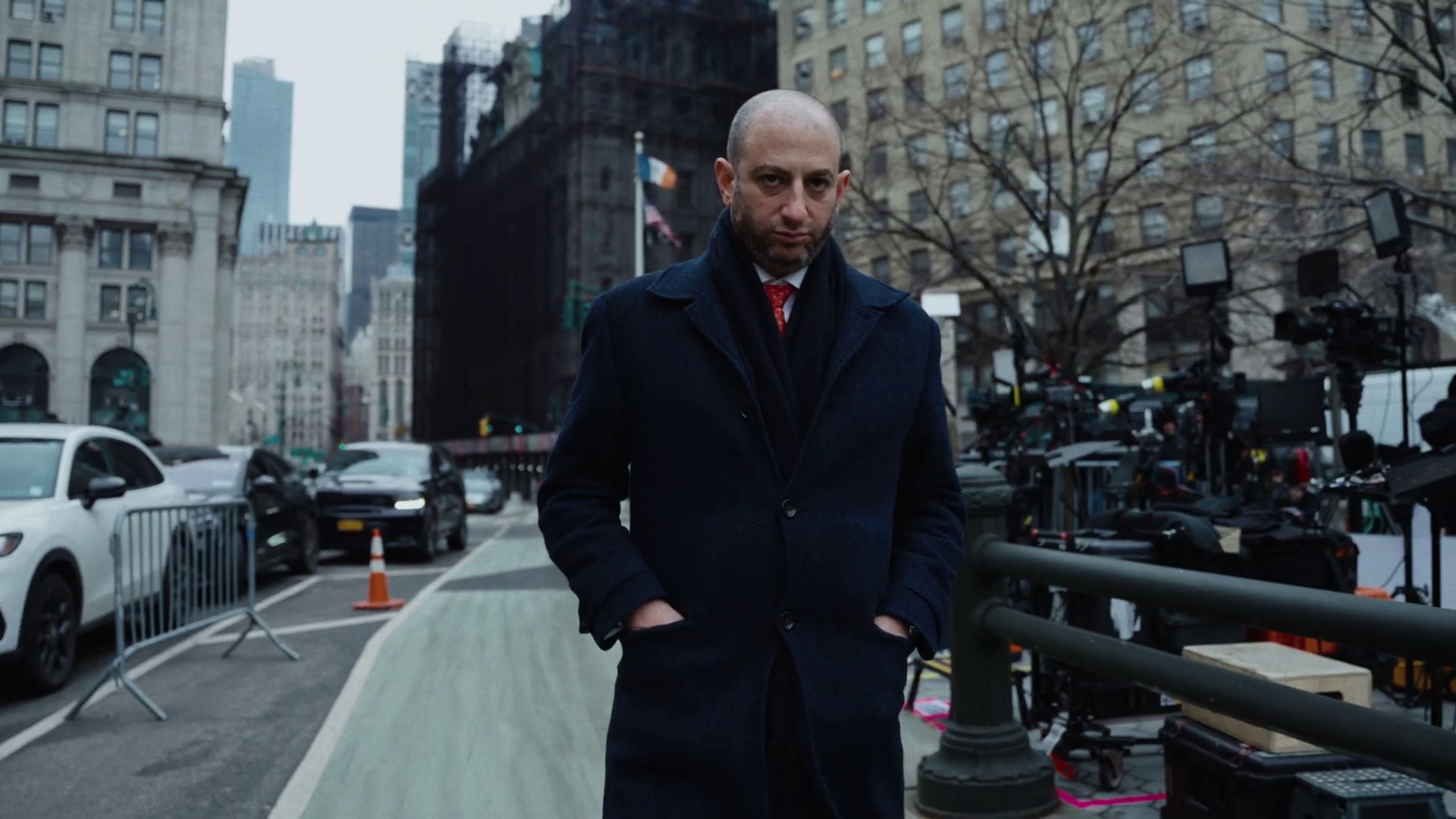
Todd Spodek
Lead Attorney & Founder
Featured on Netflix's "Inventing Anna," Todd Spodek brings decades of high-stakes criminal defense experience. His aggressive approach has secured dismissals and acquittals in cases others deemed unwinnable.
Dismissal of the indictment remains available in theory, reserved for breaches severe enough to constitute a violation of due process. In three cases over the past decade where we sought that remedy, the motion was denied. The standard is prohibitive.
The Silence in the Room
There is a particular silence in a conference room at the close of a proffer session. The prosecutors collect their notes. The case agent caps a pen. Your attorney says little on the walk to the elevator.
I have sat through enough of these sessions to recognize what that silence contains. It is not hostility. It is the recognition, shared by everyone present but spoken by no one, that the balance of information has shifted in a way that cannot be undone. You arrived with the right to remain silent. You leave having exercised the opposite of that right, in exchange for a letter whose protections occupy less space than its exceptions.
The government can break a proffer agreement. Gonzalez confirmed as much. Santobello established that a remedy must follow. These holdings are law.
The deeper problem is not the breach. It is the architecture of the agreement itself: a document framed as protection that is, in its operative clauses, a detailed authorization for the government to use your words in nearly every context that matters. The question is not whether the government will honor the letter. The question is whether you understood what the letter permitted before you spoke.
A consultation with experienced federal defense counsel is where that understanding begins. Not after the session. Not after the indictment. Before the pen reaches the signature line.
